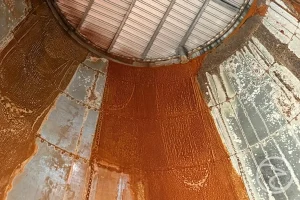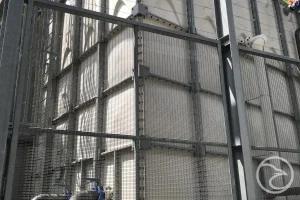
Water storage tanks gradually accumulate sediment, mineral deposits, corrosion particles, and other debris. These materials can settle on tank floors and around internal components.
Regular cleaning helps maintain water quality and supports the reliable operation of commercial and industrial storage systems. However, traditional cleaning methods can require draining large volumes of water and temporarily removing tanks from service.
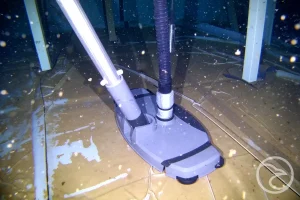
ROV tank cleaning offers an alternative for suitable storage systems. Specialised underwater robots can remove accumulated sediment while operators monitor cleaning activities from outside the tank.
This approach can reduce water loss, limit confined space entry, and minimise disruption to essential water storage operations. Understanding how robotic cleaning works helps facility managers select appropriate maintenance methods.
What is ROV Tank Cleaning?
ROV tank cleaning is a maintenance method that uses remotely operated underwater equipment to remove contamination from water storage tanks. ROV stands for Remotely Operated Vehicle.
These machines operate underwater while trained technicians control their movements from a safe location outside the tank. Unlike basic inspection drones, cleaning ROVs incorporate equipment designed to remove accumulated materials.
Depending on the system, this equipment may include:
-
Underwater cameras and lighting.
-
Remote navigation and control systems.
-
Vacuum suction equipment.
-
Sediment collection systems.
-
Cleaning attachments for accessible surfaces.
-
Monitoring equipment for recording cleaning activities.
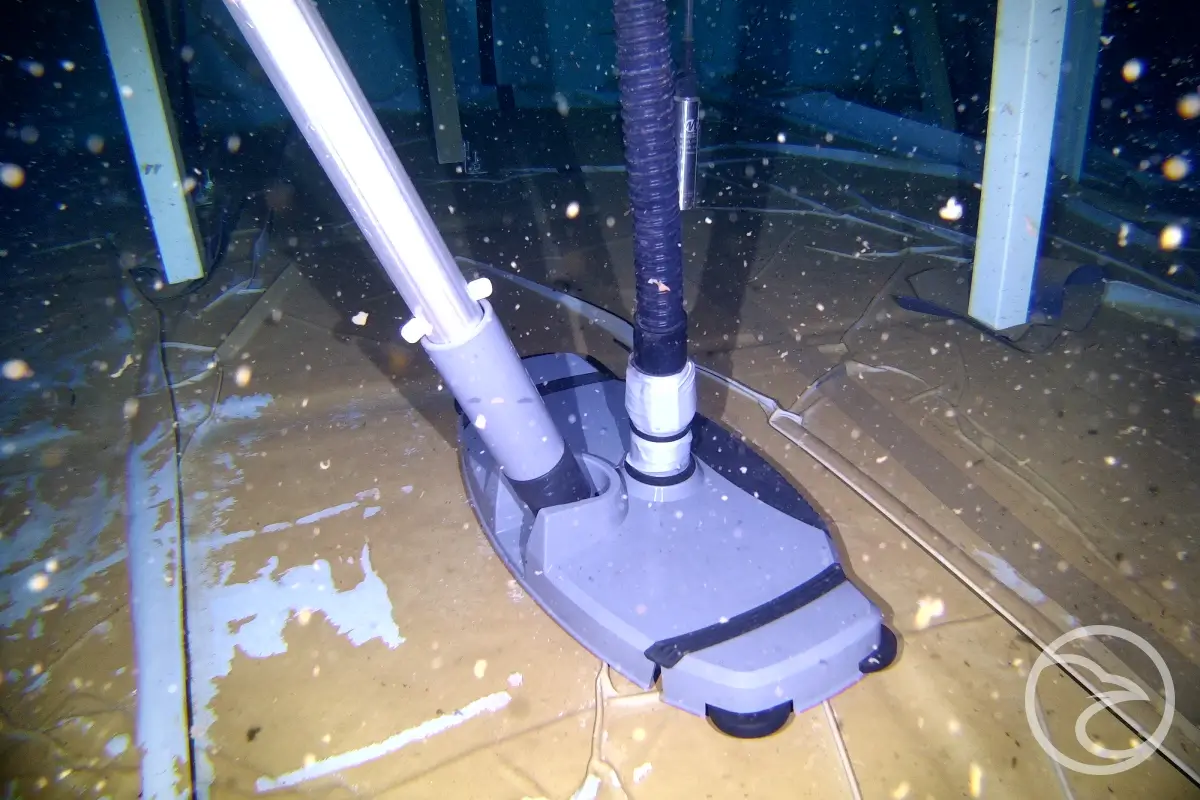
The robot moves through the tank while the operator observes internal conditions through a live video feed. Specialised suction equipment collects sediment from the tank floor.
Some systems transport contaminated water through external filtration equipment before returning treated water to the tank. Others collect removed materials for separate disposal.
The exact process depends on the equipment, contamination type, and storage application.
Why do Water Storage Tanks Need Cleaning?
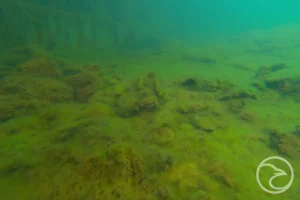
Even well-maintained storage tanks can accumulate contamination over time. Incoming water may contain suspended particles that gradually settle when water movement decreases.
Corrosion, deteriorating internal surfaces, and environmental exposure can introduce additional materials.
Common sources of contamination include:
-
Sand and fine mineral particles.
-
Rust and corrosion debris.
-
Organic material entering through damaged openings.
-
Sediment carried through incoming water.
-
Deposits accumulating around internal pipework.
-
Biological growth under suitable environmental conditions.
These materials often collect in areas with limited water circulation. Tank corners, floor joints, and spaces around internal structures can become accumulation points.
Biological contamination can also affect stored water, making it important to understand the causes and prevention of algae growth in water storage tanks.
How sediment affects tank performance
Sediment buildup can create several operational concerns. Accumulated debris may interfere with internal components or contribute to contamination risks. It can also make inspections more difficult by covering tank floors and concealing surface deterioration.
For fire water tanks, sediment accumulation around suction arrangements deserves particular attention. Any restriction affecting water withdrawal should be assessed by qualified personnel.
However, the presence of sediment does not automatically mean the tank has lost its required fire protection capacity. The actual risk depends on sediment quantity, location, tank design, and system requirements.
Regular inspections help determine when cleaning is necessary.
How does ROV Tank Cleaning Work?
Robotic tank cleaning generally follows a structured process. The procedure may vary between contractors, equipment types, and storage applications.
1. Initial tank assessment
Before cleaning begins, technicians evaluate the tank’s condition and operational requirements.
They review available information about:
-
Tank dimensions and storage capacity.
-
Access hatch dimensions.
-
Internal structures and obstructions.
-
Water quality requirements.
-
Existing liner or coating systems.
-
Sediment accumulation.
-
Operational restrictions.
This assessment helps determine whether robotic cleaning is suitable. Not every storage tank can accommodate a cleaning ROV. Restricted access, complicated internal structures, or extensive damage may require another approach.
2. Equipment preparation
The cleaning equipment must be appropriate for the stored water. Potable water tanks require particular attention to equipment hygiene and contamination prevention.
Technicians prepare the ROV, inspect its components, and establish the required control connections. Cleaning equipment may also require external pumps, filtration systems, or collection containers.
The preparation process depends on the selected cleaning method.
3. Deploying the underwater robot
The ROV enters the tank through a suitable access opening. Operators guide the machine into the water using the equipment’s control system.
Cameras provide visibility of the tank interior. Lighting allows technicians to observe surfaces where natural light is limited.
The operator can identify sediment deposits and plan an appropriate cleaning route.
4. Removing sediment
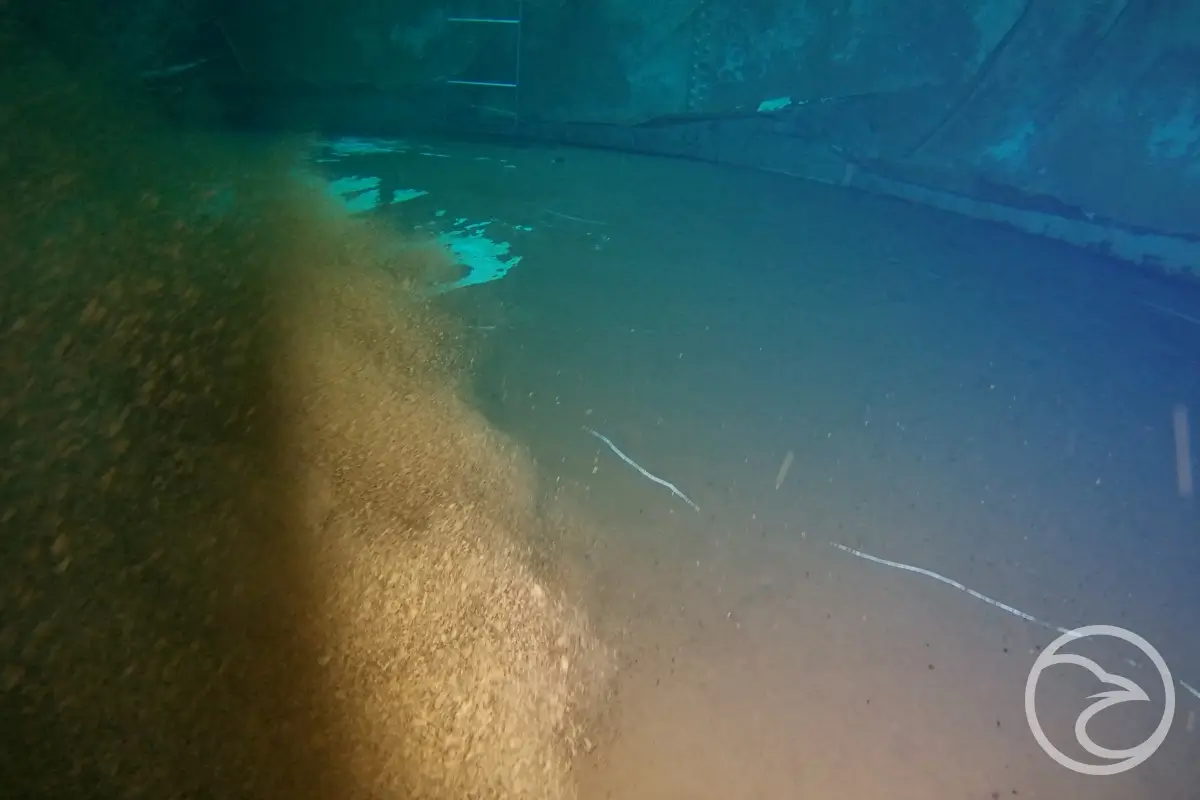
The robot moves across accessible sections of the tank floor. A specialised suction system removes settled particles and accumulated debris.
Depending on the equipment, removed material may pass through hoses into an external collection or filtration system. Operators adjust their movements to avoid unnecessary sediment disturbance.
This is particularly important where the tank remains filled during cleaning. Some robotic systems are designed to reduce the disturbance of settled material.
However, water turbidity can still increase during cleaning activities.
5. Monitoring cleaning progress
Technicians monitor the operation through live video footage. They can observe sediment removal and identify areas requiring additional attention.
The equipment may also reveal:
-
Corrosion deposits.
-
Damaged internal surfaces.
-
Unexpected debris.
-
Deteriorated coatings.
-
Obstructions near internal pipework.
These observations can help identify potential maintenance concerns. However, cleaning observations do not automatically replace a formal structural inspection. For a closer look at how underwater drones help identify damage and assess internal tank conditions, explore our drone tank inspections services.
6. Final assessment and reporting
After cleaning, operators assess the accessible areas and remove the equipment. The contractor may provide photographs, video recordings, and a summary of completed work.
A report can document:
-
Areas cleaned.
-
Sediment accumulation observed.
-
Cleaning limitations.
-
Remaining deposits.
-
Visible maintenance concerns.
-
Recommended follow-up actions.
The scope of reporting depends on the service agreement. A separate inspection may be necessary where detailed structural assessment is required.
Can ROV Tank Cleaning be Completed without Draining the Tank?
One of the main advantages of robotic cleaning is the potential to work inside filled water storage tanks. Traditional cleaning frequently involves draining the tank before workers can access internal surfaces.
For large industrial tanks, this process can require significant water disposal and operational planning. Specialised ROV cleaning systems may remove sediment without completely emptying the storage tank.
This approach is commonly described as in-service tank cleaning.
How in-service cleaning works
During in-service cleaning, the underwater robot operates within the stored water. The cleaning equipment collects sediment while the main tank structure remains filled.
Depending on the system, extracted water may be filtered and returned to storage. This can substantially reduce the volume of water lost during maintenance.
An Australian Water Association case study documented robotic reservoir cleaning trials undertaken by Icon Water. The trials demonstrated the potential for robotic equipment to clean storage assets without conventional draining procedures.
Does the tank remain operational?
A tank remaining full does not necessarily mean it can continue operating without restrictions.
Operational decisions depend on several factors:
-
The tank’s purpose.
-
Water quality requirements.
-
Fire protection system arrangements.
-
Sediment contamination levels.
-
Cleaning equipment capabilities.
-
Site-specific safety procedures.
For fire protection systems, maintaining the required water supply is particularly important. Cleaning activities must be planned around the system’s operational requirements.
Where isolation or impairment is necessary, appropriate fire protection procedures must be followed. ROV cleaning should never be presented as a guarantee of uninterrupted service for every tank.
Benefits of Robotic Water Tank Cleaning
ROV cleaning can provide practical advantages for suitable commercial and industrial water storage systems. However, these benefits depend on the equipment and site conditions.
Reduced water loss
Traditional cleaning may require the removal of substantial volumes of stored water. Robotic equipment can reduce this requirement by collecting sediment while the tank remains filled.
Some systems also incorporate filtration equipment to recover water during cleaning. This approach can be particularly valuable for large-capacity storage tanks.
It may also reduce the need to arrange replacement water after maintenance.
Reduced confined space entry
Entering a water storage tank can expose workers to significant hazards. These may include restricted access, atmospheric risks, difficult emergency access, and internal obstructions.
Remote cleaning allows technicians to perform certain tasks without physically entering the tank. This can reduce exposure to confined space hazards.
However, remote operation does not eliminate every safety requirement. Equipment installation, access arrangements, and other site activities still require appropriate risk assessments.
Less operational disruption
Removing a storage tank from service can affect facility operations. Some industrial sites depend on continuous water availability for essential processes.
Fire protection tanks also support critical safety infrastructure. Where conditions permit, robotic cleaning can reduce the need for prolonged shutdowns.
The actual operational benefit depends on whether the tank can safely remain in service.
Better visibility during cleaning
Underwater cameras allow operators to monitor accessible internal surfaces. This helps technicians identify sediment deposits and assess cleaning progress.
Recorded footage can also support maintenance documentation. Visual observations may reveal deterioration that was previously hidden beneath accumulated debris.
However, detailed structural assessments may require additional inspection methods.
Targeted sediment removal
Robotic cleaning can focus on areas where sediment has accumulated. Operators can direct suitable equipment towards accessible floor sections and internal features.
This targeted approach may reduce unnecessary disturbance elsewhere in the tank. The effectiveness depends on the robot’s mobility, suction equipment, and internal tank layout.
ROV Tank Cleaning vs Traditional Tank Cleaning
Both methods have practical applications. The most suitable option depends on tank condition, contamination levels, and maintenance objectives.
| Factor | ROV tank cleaning | Traditional manual cleaning |
|---|---|---|
| Tank drainage | May be unnecessary | Often required |
| Personnel entry | Can be avoided | May be required |
| Sediment removal | Specialised suction equipment | Manual tools, pumps, or pressure washing |
| Access | Limited by robot dimensions and movement | Limited by safe worker access |
| Heavy surface contamination | Equipment-dependent | Often more flexible |
| Structural repairs | Generally require separate work | Can provide direct access after isolation |
| Water loss | Potentially lower | Potentially higher |
When traditional cleaning may be more suitable
Robotic cleaning is not always the best solution. Some tanks contain deposits that cannot be removed effectively through underwater suction.
Other tanks may require extensive repairs or direct access to internal surfaces.
Traditional cleaning may be more appropriate when:
-
Heavy deposits require mechanical removal.
-
Internal coatings need replacement.
-
Structural repairs are necessary.
-
Damaged liners require extensive work.
-
The tank contains difficult-to-access compartments.
-
Cleaning must be followed by comprehensive surface preparation.
In these situations, draining and isolating the tank may be necessary. A professional assessment should determine the appropriate method.
What Types of Water Tanks can be Cleaned Using ROVs?
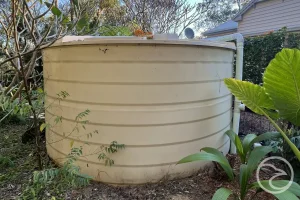
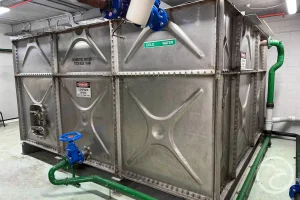
Robotic cleaning technology can be used across different water storage applications. However, equipment compatibility must be assessed individually.
Fire water storage tanks
Fire tanks provide stored water for fire protection systems. Over time, sediment and corrosion particles may accumulate inside these tanks.
ROV cleaning can help remove accessible deposits while reducing unnecessary water disposal. The cleaning plan must account for fire protection requirements and operational restrictions.
Learn more about when fire water tanks should be cleaned and the factors that influence cleaning schedules.
Potable water tanks
Potable water tanks require strict contamination controls. Cleaning equipment must be suitable for drinking water applications.
Appropriate hygiene procedures are essential before equipment enters the stored water. Operators must also consider water quality monitoring and the potential disturbance of sediment.
Industrial water storage tanks
Industrial facilities use water tanks for numerous operational purposes. Some contain process water, while others support cooling, washing, or general water supply systems.
ROV cleaning may be suitable where sediment accumulates and underwater equipment can operate safely. Water chemistry and contamination levels must be assessed before equipment selection.
Large reservoirs
Large storage reservoirs can present substantial cleaning challenges. Draining these assets may involve significant water loss and operational disruption.
Specialised robotic systems can provide an alternative for certain sediment removal tasks. Their suitability depends on reservoir construction, access, and contamination characteristics.
Can ROV Cleaning Damage Tank Liners or Internal Coatings?
Water storage tanks may contain flexible liners, protective coatings, or specialised internal finishes. These surfaces require careful treatment during cleaning.
Poorly selected equipment or inappropriate cleaning techniques can create damage risks.
Potential concerns include:
-
Contact with sharp or protruding equipment components.
-
Excessive suction near flexible liner surfaces.
-
Mechanical contact with damaged seams.
-
Disturbance of deteriorated coatings.
-
Equipment becoming trapped around internal fixtures.
Operators should review the tank’s lining system before selecting cleaning equipment. The cleaning method must be compatible with the internal materials.
Where existing liner damage is suspected, an inspection may be required before cleaning. Robotic cleaning should not be treated as a substitute for liner repairs.
What are the Limitations of ROV Tank Cleaning?
Although robotic cleaning offers important advantages, it has practical limitations. Understanding these limitations helps facility managers set realistic maintenance expectations.
Restricted access
Some tanks have narrow openings or complex internal structures. These features may prevent suitable cleaning equipment from reaching certain areas.
Limited removal of attached deposits
Vacuum systems are generally suited to collecting loose sediment. Hardened scale, strongly attached biofilm, or deteriorated coatings may require additional cleaning methods.
Reduced visibility
Heavy sediment disturbance can make underwater observation difficult. Operators may need to adjust cleaning procedures to maintain visibility.
Equipment compatibility
Not every ROV is designed for cleaning. Inspection-only equipment may lack the necessary suction systems or cleaning attachments.
Water quality concerns
Cleaning activities can disturb settled contamination. This may temporarily increase turbidity or affect other water quality indicators.
Suitable monitoring and operational controls may be necessary.
Incomplete access to damaged areas
Cleaning equipment may not reach every internal surface. Hidden structural defects can remain undetected without additional inspection methods.
These limitations demonstrate why equipment selection should follow a detailed assessment.
How Often Should Water Tanks be Cleaned Using ROVs?
There is no universal cleaning frequency suitable for every water storage tank. The appropriate interval depends on tank use, water quality, sediment accumulation, and applicable maintenance requirements.
Factors influencing cleaning frequency include:
-
Incoming water quality.
-
Tank age and construction materials.
-
Sediment accumulation rates.
-
Internal corrosion.
-
Water circulation patterns.
-
Previous inspection findings.
-
Regulatory and operational requirements.
A tank receiving relatively clean water may accumulate sediment slowly. Another tank exposed to suspended solids or internal deterioration may require more frequent attention.
Routine inspections help identify changing conditions and determine when cleaning is necessary. For fire water tanks, maintenance planning should also consider the applicable Australian fire protection standards.
Cleaning intervals should not be determined solely by the availability of robotic equipment.
How to Choose a Suitable ROV Tank Cleaning Method
Facility managers should consider several questions before arranging robotic cleaning.
Is the equipment designed for cleaning?
Confirm that the system includes appropriate sediment removal equipment. A camera-equipped inspection drone alone may not provide the required cleaning capabilities.
Can the equipment access the tank?
Review hatch dimensions, internal obstructions, and tank geometry.
Is the system compatible with the stored water?
Potable water applications require appropriate equipment hygiene and contamination controls.
Can the tank remain in service?
Determine whether operational restrictions or temporary isolation will be necessary.
What contamination must be removed?
Loose sediment may be suitable for suction removal. Heavy deposits or damaged coatings may require alternative methods.
What documentation will be provided?
Cleaning records, photographs, and observations can support future maintenance planning. A qualified contractor should assess these factors before recommending a cleaning procedure.
The Role of ROV Cleaning in Long-Term Tank Maintenance
ROV cleaning is one component of a broader water tank maintenance strategy. Cleaning removes accumulated contamination, while inspections assess the condition of the storage system.
Both activities help facility managers understand developing maintenance requirements.
A comprehensive maintenance approach may involve:
-
Routine tank inspections.
-
Sediment monitoring.
-
Robotic or traditional cleaning.
-
Internal coating assessments.
-
Liner inspections.
-
Corrosion monitoring.
-
Repairs and component replacement.
Where sediment accumulation is detected, appropriate cleaning can improve access to internal surfaces. This may help technicians assess previously concealed deterioration.
However, cleaning alone cannot correct structural damage, leaking joints, or deteriorated liners. These issues require appropriate repair methods.
Professional water tank cleaning should therefore form part of a planned inspection and maintenance programme.
Conclusion
ROV tank cleaning provides a practical alternative to traditional cleaning methods for suitable water storage systems. Specialised underwater robots can remove accumulated sediment while reducing the need for tank drainage and personnel entry.
These capabilities can support safer maintenance and minimise unnecessary water loss. However, robotic cleaning is not suitable for every tank or contamination type.
Equipment selection must consider tank construction, access, internal surfaces, water quality, and operational requirements. For commercial and industrial facilities, combining appropriate cleaning methods with regular inspections supports more effective long-term tank maintenance.