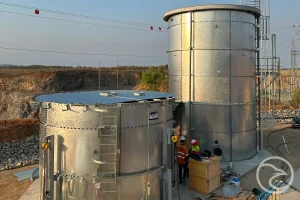
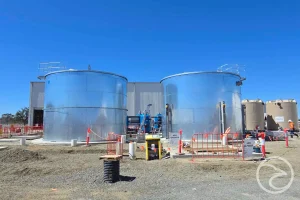
Fire water tanks are designed to provide a reliable water supply when a fire protection system activates. However, stored water does not remain unchanged indefinitely.
Sediment can settle on the tank floor. Debris may enter through openings, pipework, or the water supply. Biological material can also develop under suitable conditions. These changes make regular inspection and cleaning an important part of fire water tank management.
So, how often should fire water tanks be cleaned? There is no single cleaning interval suitable for every tank.
Cleaning requirements depend on tank condition, inspection findings, contamination levels, and applicable maintenance requirements. Australian requirements also include scheduled servicing activities for fire protection water storage tanks.
This guide explains when cleaning may be required and what signs facility managers should watch for. It also covers sediment, water quality, cleaning methods, tank types, and Australian maintenance requirements.
How Often Should a Fire Water Tank be Cleaned?
A fire water tank should be cleaned according to applicable servicing requirements and its actual internal condition. A calendar alone cannot show how quickly sediment or contamination is developing. Two similar tanks can require cleaning at different times.
Their water sources, environments, construction, age, and maintenance histories may differ considerably. Regular inspections are therefore essential.
They can identify sediment, corrosion, liner deterioration, contamination, and other changes before they become more significant.
Cleaning may need to be brought forward when inspections identify:
- Excessive sediment
- Sludge accumulation
- Organic debris
- Biological buildup
- Poor water condition
- Internal contamination
- Significant deposits
- Problems affecting tank components
- Conditions requiring closer internal assessment
A condition-based approach should complement scheduled servicing requirements. It should not replace the maintenance obligations applying to the fire protection system.
What Does AS 1851:2012 Say About Fire Tank Cleaning?
AS 1851:2012 covers routine servicing of fire protection systems and equipment in Australia. Its scope includes water storage tanks used within fire protection systems. FPA Australia identifies specific post-annual servicing requirements for these tanks.
For the 10-year service, the tank is drained and debris and sludge are removed. A method without draining can also be used when all required cleaning activities are completed. The internal floor and walls are also pressure washed.
Where a liner is installed, cleaning should avoid damaging the liner. This distinction matters. The standard should not be interpreted as meaning tank condition is irrelevant between major service intervals.
Inspections can identify conditions requiring earlier action. For example, significant sediment or contamination should not simply remain until the next major scheduled service.
The appropriate response depends on inspection findings and applicable site requirements. For a broader overview of inspection, servicing, documentation, and maintenance obligations, see our guide to AS 1851 Compliance Requirements.
Why Does Sediment Accumulate in Fire Water Tanks?
Sediment accumulation is a normal concern in long-term water storage. Small suspended particles can enter the tank with incoming water. These particles gradually settle when water remains relatively still.
The process can create deposits across the tank floor. Sediment sources can vary between sites.
Common contributors include:
- Incoming water supplies
- Dust and airborne material
- Corrosion products
- Organic matter
- Debris entering the tank
- Material from connected pipework
- Disturbed deposits during filling
- Environmental contamination
The accumulation rate is rarely identical across different facilities. This is one reason fixed cleaning assumptions can be misleading.
A tank with significant sediment may require attention earlier than another tank of the same age.
Why is Sediment Buildup a Concern?
A thin deposit can become progressively deeper when sediment remains undisturbed. That accumulation can make internal tank conditions more difficult to assess.
Heavy deposits can also conceal the condition of the tank floor.
Sediment may contribute to several maintenance concerns:
- Reduced effective water storage
- Poorer water condition
- Accumulated organic material
- Hidden tank floor surfaces
- Localised contamination
- Increased sludge formation
- Deposits around internal components
Inspection guidance also considers sediment and sludge levels because excessive accumulation can affect effective water capacity. Removing accumulated deposits allows internal surfaces to be assessed more effectively.
Signs a Fire Water Tank may Need Cleaning
Cleaning requirements are often identified during routine inspections. However, some changes may become noticeable between scheduled inspections.
Facility managers should pay attention to unusual changes in stored water or tank condition.
Common warning signs include:
- Visible sediment
- Sludge on the tank floor
- Cloudy or turbid water
- Discoloured water
- Floating debris
- Organic material
- Biological buildup
- Unusual odours
- Corrosion products
- Contamination identified during inspection
Any significant change deserves investigation. The underlying cause can be as important as the visible contamination. Simply removing sediment without identifying its source may allow the problem to return.
Water Quality and Fire Tank Cleaning
Fire water is stored for system availability rather than routine consumption. However, water condition still matters. Changes within stored water can provide evidence of conditions developing inside the tank. Turbidity can indicate suspended material.
Discolouration can indicate sediment, corrosion products, organic matter, or another source. Visible debris can indicate contamination entering the storage system. Water condition should therefore be considered alongside physical tank inspection.
It should not be used as the only measure of tank cleanliness. Clear-looking water does not necessarily mean the tank floor is free from sediment.
Large deposits can remain settled and largely invisible from the surface.
Biological Growth and Biofilm
Water storage environments can support biological activity under certain conditions. The exact risk depends on water characteristics, temperature, nutrients, tank conditions, and environmental exposure.
Biological material may appear alongside sediment and other deposits.
Possible indicators include:
- Slime-like deposits
- Organic material
- Unusual water appearance
- Biological deposits on surfaces
- Increased sludge
- Unexplained contamination
These findings should be assessed rather than treated as normal tank ageing. Cleaning may form part of the response when biological buildup is present.
The source and extent should also be considered.
Microbiologically Influenced Corrosion
Biological activity can become particularly important in metallic environments. Microbiologically influenced corrosion, commonly called MIC, involves corrosion associated with microbial activity.
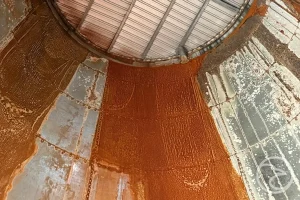
MIC is not simply another name for ordinary rust. Microorganisms and biofilms can alter local conditions on susceptible metallic surfaces. Deposits can also make affected surfaces more difficult to inspect.
This makes sediment and biological buildup relevant to broader tank condition assessments. Cleaning exposes surfaces that may otherwise remain covered.
Any suspected corrosion should then be assessed separately from the cleaning process.
How are Cleaning Requirements Identified?
Inspection should normally come before decisions about the cleaning method. The objective is to understand what is inside the tank and how extensive the buildup has become.
An assessment may consider:
- Sediment depth
- Sediment distribution
- Sludge
- Debris
- Biological material
- Water condition
- Tank floor condition
- Liner condition
- Internal corrosion
- Access limitations
- Operational requirements
Inspection findings help determine whether cleaning is necessary. They also help determine which cleaning approach is appropriate.
This prevents unnecessary draining when a less disruptive method can achieve the required result.
Fire Tank Cleaning Methods
There are two broad approaches to cleaning fire water tanks. A tank can be drained for direct internal cleaning.
Alternatively, suitable deposits can be removed while water remains inside the tank. Neither approach is automatically best for every situation.
Tank condition and operational requirements should guide the decision.
When inspection findings confirm significant sediment or contamination, professional fire tank cleaning can restore suitable internal tank conditions.
Drain and Clean
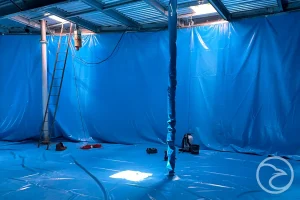
A Drain and Clean approach involves emptying the tank before internal cleaning. This provides direct access to internal surfaces.
The process can support more extensive cleaning where significant contamination has accumulated.
A typical process may involve:
- System isolation
- Controlled drainage
- Sediment removal
- Debris extraction
- Sludge removal
- Internal surface cleaning
- Inspection of accessible surfaces
- Removal of cleaning residue
- Refilling
This method can be appropriate when heavy deposits require extensive removal. It can also assist when direct access to internal surfaces is necessary.
However, draining affects water availability and requires appropriate planning.
No-Drain Cleaning
Not every tank needs to be emptied for sediment removal. No-Drain methods allow suitable cleaning work to occur while water remains within the tank.
Specialist underwater equipment can remove deposits from the tank floor. Depending on the application, this may involve ROV equipment or commercial divers.
Potential advantages include:
- Reduced water loss
- Less downtime
- Reduced operational disruption
- Underwater sediment extraction
- Continued water storage
- Targeted cleaning
However, No-Drain cleaning is not automatically suitable for every tank. Heavy contamination or other maintenance requirements may make draining more appropriate.
The method should follow the tank assessment and required cleaning scope.
ROV Cleaning Versus Diver-Assisted Cleaning
ROVs can provide access to submerged areas without placing personnel inside the water. They can support inspection and targeted sediment removal in suitable tank configurations. Commercial divers can provide another option for underwater work.
The selection depends on access, tank geometry, cleaning scope, and internal conditions. An ROV may be useful for repeatable underwater assessment and targeted cleaning. Diver-assisted work can provide physical access where hands-on tasks are required. The important point is not choosing technology first.
The cleaning objective should determine the equipment.

Does Tank Type Affect Cleaning Frequency?
Yes. Tank construction and configuration can influence how deposits accumulate and how cleaning is performed. Access also varies considerably between tank designs.
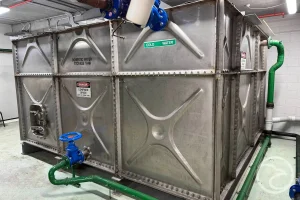
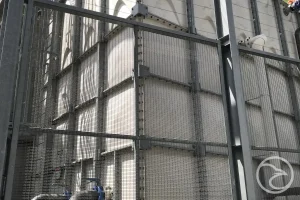
Above-Ground Fire Water Tanks
Above-ground tanks are common across commercial and industrial fire protection systems. Their configuration can make some inspection and maintenance activities more accessible.
However, sediment can still accumulate across the floor. Cleaning requirements depend on internal conditions rather than external accessibility alone.
Underground Fire Water Tanks
Underground tanks can present different access and operational challenges. Restricted entry points may influence inspection and cleaning methods.
ROV or diver-assisted methods may be appropriate for some configurations. Drain and Clean may be required in other circumstances.
The surrounding environment can also affect maintenance planning.
Lined Fire Water Tanks
Some fire water tanks contain internal liners. Cleaning must account for liner condition and material.
Aggressive cleaning can potentially damage an existing liner. FPA Australia specifically notes that installed liners should not be damaged during required cleaning activities.
The liner should also be inspected for deterioration where appropriate.
Steel Fire Water Tanks
Steel tanks require attention to internal corrosion as well as sediment. Deposits can obscure sections of the floor or other metallic surfaces.
Cleaning can expose areas requiring further condition assessment. Corrosion findings may then require maintenance beyond routine cleaning.
Concrete Fire Water Tanks
Concrete tanks have different surface characteristics from steel tanks. Sediment and biological deposits can still accumulate across internal areas.
Cracks, surface deterioration, joints, and other conditions may also require inspection. Cleaning methods should reflect the substrate and existing condition.
Commercial and Industrial Tanks
Cleaning requirements can also vary with facility type. Commercial buildings may have different operational constraints from industrial plants.
Industrial sites may require careful planning around continuous operations and critical infrastructure.
Relevant factors include:
- Required fire system availability
- Facility operating hours
- Tank capacity
- Site access
- Isolation options
- Water replacement requirements
- Tank configuration
- Safety procedures
The cleaning schedule should therefore fit both tank condition and site requirements.
Fire Hydrant and Sprinkler Water Storage
Fire tanks may supply hydrant systems, sprinkler systems, or combined fire protection arrangements. Sediment management remains relevant across these applications.
Stored water needs to remain available for the system it supports. Heavy deposits should therefore be identified before they become a larger maintenance issue.
Tank servicing should also be coordinated with the wider fire protection system. Cleaning is only one part of maintaining that system.
Can Fire Tanks be Cleaned too Often?
Cleaning should have a clear maintenance purpose. Unnecessary cleaning can create avoidable water loss, downtime, and operational work.
It may also expose liners and other surfaces to unnecessary cleaning activity. This is another reason inspections matter. They provide evidence for determining whether cleaning is currently required.
The objective is not maximum cleaning frequency. The objective is maintaining suitable tank condition and fire water storage reliability.
What can Make a Tank Need Cleaning Earlier?
Some tanks accumulate contamination faster than others. Environmental and operational factors can accelerate that process.
Possible factors include:
- Poor incoming water quality
- High sediment loads
- Dusty environments
- Organic contamination
- Previous corrosion
- Ageing internal components
- Damaged covers or openings
- Contaminated water entering the tank
- Long periods between internal assessments
- Previous maintenance issues
External events can also introduce contamination. For example, bushfires can introduce ash, debris, and other pollutants into exposed water storage systems.
An unusual contamination event should trigger assessment rather than waiting for the normal servicing date.
Cleaning Should not Replace Inspection
Cleaning and inspection have different purposes. Cleaning removes unwanted material.
Inspection determines the condition of the tank and its components. One should not automatically replace the other.
A clean tank can still contain structural or mechanical defects. Likewise, an apparently sound tank can contain significant floor sediment.
A broader inspection may examine:
- Tank structure
- Internal surfaces
- Corrosion
- Liners
- Coatings
- Valves
- Pipework
- Water levels
- Overflow arrangements
- Access systems
- Contamination
- Sediment
Routine inspection provides the information needed to make better maintenance decisions.
Cleaning and Preventive Maintenance
Cleaning is most effective when integrated into a broader maintenance program. The process should not end when sediment leaves the tank.
The cause of unusual buildup should also be considered. Maintenance records can help identify recurring problems.
For example, rapidly increasing sediment may indicate changes in incoming water or another part of the system. Repeated biological contamination may also justify further investigation.
Good records can include:
- Inspection dates
- Sediment findings
- Cleaning dates
- Cleaning methods
- Water condition observations
- Defects identified
- Repairs completed
- Liner condition
- Follow-up requirements
This history provides useful context during future inspections. Regular cleaning should form part of a broader fire tank maintenance program covering tank condition, defects, repairs, and ongoing servicing.
Why Fixed Cleaning Intervals can be Misleading
A simple answer such as “clean every few years” sounds convenient. In practice, it can oversimplify fire water tank maintenance.
Scheduled requirements matter, but actual tank condition also matters. One tank may remain relatively clean between major services. Another may develop significant sediment much sooner. Inspection-based decisions account for these differences.
They also allow cleaning to be planned before deposits become excessive.
The best approach combines three elements:
- Applicable servicing requirements
- Regular condition inspections
- Earlier cleaning when findings justify it
This provides a more practical framework than relying on age alone.
So, How Often Should Fire Water Tanks be Cleaned?
Fire water tanks should be cleaned according to applicable servicing requirements and whenever their condition indicates earlier cleaning is necessary.
AS 1851:2012 includes specific servicing requirements for fire protection water storage tanks. FPA Australia identifies drain, debris and sludge removal, and internal cleaning within the 10-year service activities.
The guidance also allows a non-drain method when all required cleaning activities are completed. However, waiting for a major scheduled interval is inappropriate when significant contamination is already present.
Sediment levels, sludge, biological buildup, water condition, and inspection findings should inform the decision.
The tank type also matters. Operational requirements matter as well. A facility requiring continuous fire water availability may need a different cleaning strategy from a tank that can be isolated.
The key principle is simple. Inspect regularly, assess actual conditions, and clean when servicing requirements or tank condition indicate it is necessary.
That approach supports cleaner water storage, clearer condition assessment, and more effective long-term fire tank maintenance.