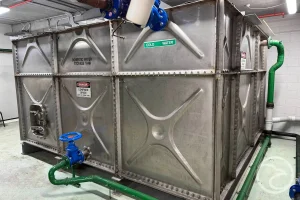
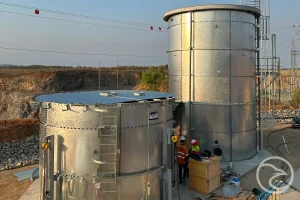
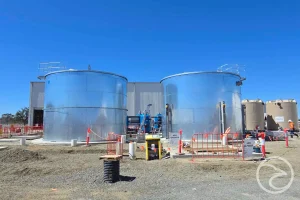
GRP panel water tanks have become one of the most widely used water storage solutions worldwide. They are used across commercial, industrial, municipal and agricultural sectors because they are durable, modular and resistant to corrosion.
Unlike traditional welded steel or concrete tanks, GRP panel tanks are assembled from individual panels. This modular design makes them easier to transport, install and expand as storage requirements change.
These tanks are suitable for many water storage applications. They can store potable water, process water, irrigation water, rainwater and fire protection water. Different panel specifications are available to suit different operating conditions.
This guide explains how GRP water tanks work, their advantages and limitations, common applications, expected lifespan, maintenance requirements and how they compare with other tank materials.
Whether you are planning a new project or researching water storage options, understanding how GRP tanks are designed will help you choose the right solution.
What are GRP Panel Water Tanks?
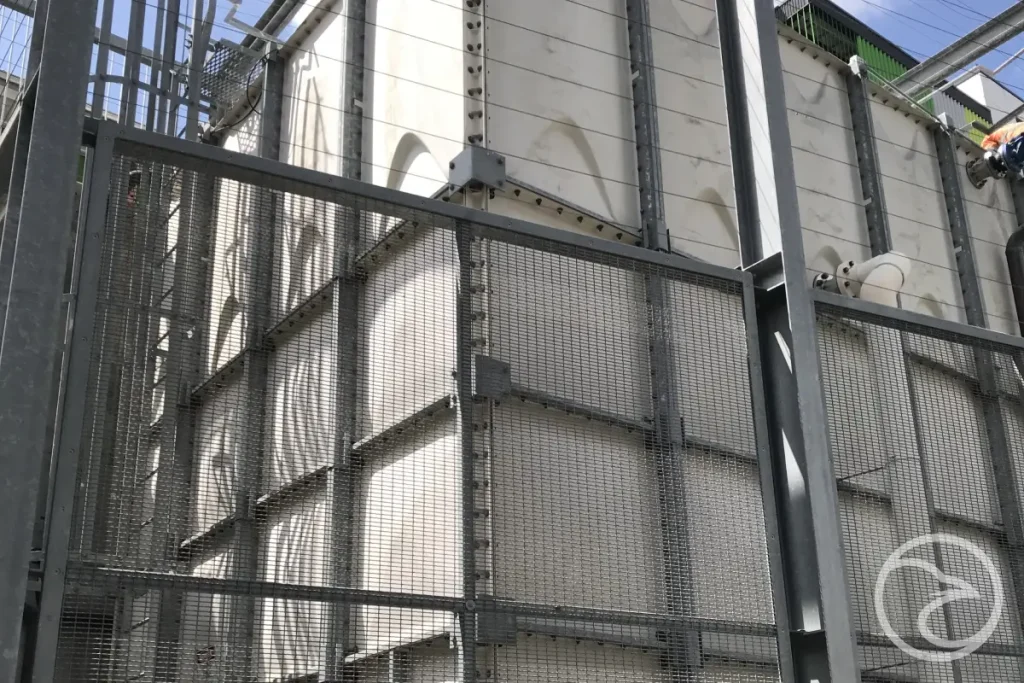
A GRP panel water tank is a modular water storage system manufactured from Glass Reinforced Plastic (GRP). The tank is assembled using individual factory-made panels that are bolted together on site to form the required size and capacity.
Unlike one-piece tanks, GRP water tanks can be manufactured in many different dimensions. This flexibility allows engineers to design tanks that suit available space while meeting specific storage requirements.
Each panel is produced under controlled manufacturing conditions to ensure consistent quality and strength. The panels are connected using bolts, sealing materials and internal bracing to create a watertight structure.
Depending on the application, the tank may include:
- Roof panels
- Internal support structures
- Access hatches
- Inspection openings
- Overflow connections
- Inlet and outlet pipework
- Level indicators
- Ventilation systems
- Access ladders
The finished structure provides reliable long-term water storage while requiring relatively little maintenance. Because the tank is assembled on site, it can often be installed in locations where transporting a fully fabricated tank would be impossible.
What Does GRP Mean?
GRP stands for Glass Reinforced Plastic. It is a composite material made by combining glass fibres with a polymer resin. The glass fibres provide structural strength, while the resin binds the fibres together and protects them from moisture and environmental exposure.
The combination produces a material that is:
- Strong
- Lightweight
- Corrosion resistant
- Durable
- Stable in harsh environments
Different resin systems can be used depending on the intended application. For potable water storage, manufacturers use materials suitable for drinking water applications. Other resin systems may be selected where increased chemical resistance or specific environmental performance is required.
Because GRP does not rust like carbon steel, it performs well in humid environments and coastal regions where corrosion can shorten the life of traditional metal tanks.
Why are They Called Panel Tanks?
The name comes from the way the tank is constructed. Instead of being manufactured as one complete vessel, the tank is built from multiple square or rectangular panels. These panels are bolted together during installation to create the finished structure.
This modular design offers several important advantages.
Easier transportation
Individual panels occupy less space during transport than a fully assembled tank. This reduces freight costs and allows delivery to sites with restricted access.
Flexible sizing
The overall tank dimensions are determined by the number of panels used. This allows designers to create tanks with capacities ranging from a few thousand litres to several million litres.
Simpler installation
Large welded tanks often require specialised transport and heavy lifting equipment. Panel tanks can usually be assembled on prepared foundations using standard installation methods.
Future expansion
One of the biggest advantages of panel construction is flexibility. If water demand increases, many GRP panel tanks can be enlarged by adding additional panels.
This can reduce future capital costs when storage requirements change.
Easier repairs
If a single panel becomes damaged, it can often be replaced without replacing the entire tank. In some cases, refurbishment provides a more economical solution than complete replacement.
How are GRP Panel Water Tanks Constructed?
Although every manufacturer has its own design, most GRP panel tanks share similar structural components.
GRP panels
The wall panels form the main structure of the tank. Different panel thicknesses may be selected depending on water depth and structural loading.
Lower panels usually experience greater water pressure than upper panels. For this reason, thicker panels are often installed closer to the base of the tank.
Internal bracing
Larger tanks require internal support systems. Steel or composite bracing helps distribute loads throughout the structure and reduces movement under operating conditions.
The bracing system is designed to maintain structural integrity while allowing the tank to withstand varying water levels.
Roof system
Most commercial GRP tanks include a roof.
The roof helps:
- Prevent contamination
- Reduce algae growth
- Limit debris entering the tank
- Improve water quality
- Reduce sunlight exposure
Roof designs vary depending on tank size and project requirements.
Base support
GRP panel tanks are typically installed on reinforced concrete foundations or engineered support structures. A level foundation is essential for proper installation.
Uneven support can create unnecessary stress on the panels and joints.
Sealing system
The joints between panels are sealed using specialised gasket materials and sealing compounds. These seals help create a watertight structure while accommodating small movements caused by temperature changes and operational loads.
Regular inspections help confirm that seals remain in good condition throughout the tank’s service life.
Accessories
Modern GRP tanks can include a wide range of accessories, including:
- Access ladders
- Internal ladders
- Level sensors
- Overflow systems
- Drain connections
- Ventilation units
- Inspection hatches
- Safety handrails
- Float valves
The final specification depends on the intended application and relevant project requirements.
How Do GRP Panel Water Tanks Work?
A GRP panel tank stores water using a sealed modular structure. Water enters the tank through inlet pipework and is retained within the interconnected panel system. As the tank fills, water pressure increases towards the bottom of the structure.
The tank is engineered to safely withstand these changing loads. Internal bracing distributes structural forces throughout the tank while the panels resist hydrostatic pressure. The sealing system prevents water from escaping through the panel joints.
When water is required, it leaves the tank through the outlet connection. Additional systems may be installed to monitor water levels, control inflow or maintain water quality.
Many commercial installations also include overflow pipes, drainage systems and inspection access to simplify maintenance throughout the life of the tank.
Benefits of GRP Water Tanks
GRP panel water tanks are widely used because they combine durability, flexibility and low maintenance. Their modular design also makes them suitable for projects of almost any size.
While every project has different requirements, several advantages make GRP tanks a popular choice across many industries.
Modular Design
Every GRP tank is assembled from individual panels. This modular construction allows tanks to be manufactured in many different sizes without changing the overall design.
The same system can be used for small commercial installations or large municipal water storage projects. If storage requirements increase, many tanks can also be expanded by adding additional panels.
Lightweight Construction
GRP is significantly lighter than steel and concrete. Lower weight can simplify transportation and installation, particularly on sites with restricted access.
It may also reduce lifting requirements during construction.
Long Service Life
When correctly installed and maintained, GRP panel tanks can provide reliable service for several decades. Their corrosion resistance helps minimise structural deterioration over time.
Routine inspections and maintenance further support long-term performance.
Hygienic Water Storage
GRP is commonly used for potable water storage because it provides a clean internal surface. Smooth internal finishes reduce the accumulation of sediment and biological growth compared with rougher materials.
For drinking water applications, manufacturers use materials suitable for potable water storage. Projects with strict hygiene requirements may also consider Stainless Steel Sectional Tanks, which provide another reliable solution for potable water storage.
Low Maintenance Requirements
GRP tanks generally require less maintenance than unprotected steel tanks. They do not require regular repainting to prevent corrosion.
Maintenance usually focuses on inspections, cleaning and checking seals and accessories.
Flexible Installation
Panel tanks can be assembled on site after delivery. This makes installation easier where access is limited or where transporting a fully fabricated tank is impractical.
The modular design is particularly useful for projects inside existing buildings or confined plant rooms.
Cost-Effective Over the Long Term
Although the initial purchase price varies between projects, GRP tanks often provide lower lifetime costs. Reduced corrosion, lower maintenance requirements and long service life can decrease overall ownership costs.
Limitations of GRP Water Tanks
No storage solution is suitable for every application. Understanding the limitations of GRP tanks helps ensure the correct tank type is selected for each project.
Higher Initial Investment
GRP panel tanks may have a higher upfront cost than some basic steel or polyethylene tanks. However, lower maintenance requirements often improve long-term value.
Professional Installation Is Essential
Correct installation is critical. Poorly prepared foundations or incorrect assembly may affect structural performance and watertightness.
Installation should always follow the manufacturer’s engineering requirements.
Impact Damage
Although GRP is strong, it can be damaged by severe impacts. Heavy equipment or accidental collisions may crack individual panels.
Fortunately, damaged panels can often be replaced without replacing the complete tank.
Not Suitable for Every Chemical
GRP offers good resistance to many environments. However, not every resin system is compatible with every chemical.
Chemical storage projects require careful assessment of chemical compatibility before selecting tank materials.
Regular Inspections Remain Important
GRP tanks require less maintenance than many alternatives. However, inspections should never be overlooked.
Routine inspections help identify seal wear, accessory issues and any signs of structural damage before they become larger problems.
Common Applications of GRP Panel Water Tanks
One reason GRP tanks are so popular is their versatility. The same modular design can be adapted for many different industries and operating conditions.
Below are some of the most common applications.
Potable Water Storage
GRP panel tanks are widely used for drinking water storage. Suitable materials help maintain water quality while providing long-term durability.
Typical applications include:
- Residential developments
- Apartment buildings
- Hotels
- Hospitals
- Schools
- Commercial buildings
- Municipal water supplies
For projects requiring premium corrosion resistance and high hygiene standards.
Fire Water Storage
Many commercial and industrial facilities require dedicated fire water storage. GRP tanks are commonly used to store water for fire protection systems because they are durable, corrosion resistant and available in large capacities.
Typical applications include:
- Warehouses
- Distribution centres
- Manufacturing facilities
- Commercial buildings
- Mining operations
- Infrastructure projects
Where fire protection is the primary purpose, purpose-built Fire Water Tanks are often selected to meet specific project and compliance requirements.
Industrial Process Water
Many industries require reliable process water every day. GRP tanks can provide storage for water used during manufacturing and production.
Examples include:
- Food processing
- Beverage production
- Manufacturing
- Processing plants
- Industrial facilities
Each project should confirm material compatibility with its operating conditions.
Rainwater Harvesting
Collected rainwater is often stored in GRP panel tanks before being used around the site.
Typical uses include:
- Landscape irrigation
- Toilet flushing
- Vehicle washing
- Cooling systems
- General non-potable water supply
The modular design allows storage capacity to be matched to rainfall collection systems.
Agriculture and Irrigation
Reliable water storage is essential for agricultural operations.
GRP tanks are commonly used for:
- Irrigation water
- Livestock water
- Farm infrastructure
- Rural water storage
- Crop production
Their corrosion resistance is particularly valuable in outdoor environments.
Mining Operations
Mining sites often operate in remote and demanding conditions. GRP panel tanks provide dependable water storage for many mining applications.
These include:
- Process water
- Dust suppression
- Site services
- Potable water
- Emergency water reserves
The modular design also simplifies transport to remote locations.
Chemical and Industrial Applications
Some GRP tanks are designed for chemical and industrial liquids. However, suitability depends on the specific resin system and the chemical being stored.
Before selecting a tank, engineers should always assess:
- Chemical compatibility
- Temperature
- Concentration
- Operating conditions
- Manufacturer recommendations
A properly specified GRP tank can provide excellent performance, but material selection is critical for these applications.
How Long Do GRP Panel Water Tanks Last?
GRP panel water tanks are designed for long-term service. When properly installed and maintained, many tanks remain in operation for 30 years or more. Some installations continue performing well beyond this period.
Actual service life depends on several factors, including:
- Manufacturing quality
- Installation standards
- Foundation design
- Water quality
- Environmental conditions
- Maintenance practices
- Frequency of inspections
A well-maintained tank will usually last longer than one that receives little attention. Regular inspections also help identify small issues before they develop into major repairs.
Factors That Affect Tank Lifespan
Several conditions influence how long a GRP tank will perform efficiently.
Installation Quality
Correct installation is one of the most important factors. The foundation must be level and capable of supporting the full operating weight of the tank.
Panels, seals and internal bracing should also be assembled according to the manufacturer’s specifications.
Water Quality
The quality of stored water can influence long-term performance. Water containing high levels of sediment may increase cleaning requirements.
Certain chemicals may also affect components if the tank has not been designed for those conditions.
Environmental Conditions
External conditions can affect the tank throughout its life.
These include:
- UV exposure
- High temperatures
- Coastal environments
- Strong winds
- Heavy rainfall
GRP performs well in many climates, but routine inspections remain important.
Maintenance
Simple maintenance tasks can significantly extend the service life of a tank. Cleaning sediment, checking seals and inspecting accessories help maintain reliable operation.
How to Maintain a GRP Water Tank
GRP tanks are considered relatively low maintenance. However, they should still be included in a planned maintenance programme.
Routine maintenance helps maintain water quality and protects the structure.
Inspect the Exterior
Regular visual inspections can identify obvious issues before they become serious.
Inspect for:
- Damaged panels
- Loose bolts
- Cracks
- Leaks
- Movement
- Corrosion on metal accessories
Exterior inspections are quick and often identify problems early.
Inspect Internal Components
Where safe access is available, internal inspections should also be carried out.
Inspect:
- Internal bracing
- Panel surfaces
- Roof supports
- Access hatches
- Pipe penetrations
- Internal joints
Any unusual movement or deterioration should be investigated.
Clean the Tank
Sediment naturally settles over time. Periodic cleaning helps maintain water quality and reduces biological growth.
Cleaning frequency depends on:
- Water source
- Water quality
- Tank use
- Local operating conditions
Potable water systems generally require more controlled cleaning procedures.
Check Seals and Joints
Every panel connection relies on sealing materials to prevent leaks.
During inspections, check for:
- Seal deterioration
- Water seepage
- Joint movement
- Damaged gaskets
Replacing worn seals early is usually simpler than repairing leaks later.
Inspect Accessories
Tank accessories also require regular attention.
These may include:
- Float valves
- Overflow pipes
- Drain valves
- Vents
- Access covers
- Level sensors
Keeping accessories in good condition helps ensure reliable operation.
When Should GRP Panel Tanks Be Inspected?
Inspection frequency depends on the application, operating environment and project requirements. Many owners perform routine visual inspections several times each year.
More detailed inspections may be completed annually or as part of scheduled maintenance programmes.
Additional inspections are recommended after:
- Severe storms
- Flooding
- Earth movement
- Vehicle impacts
- Structural modifications
- Significant repairs
Any unusual leak or movement should also be investigated promptly. For tanks supporting fire protection systems, inspection programmes may also need to comply with applicable maintenance standards and local regulatory requirements.
Can GRP Panel Tanks Be Repaired?
Yes. One advantage of modular construction is that many repairs can be completed without replacing the entire tank.
Repair methods depend on the type and extent of the damage.
Common repair work includes:
- Replacing damaged panels
- Renewing seals
- Tightening connections
- Repairing roof components
- Replacing accessories
- Fixing minor leaks
Early repairs are generally less expensive than allowing problems to worsen.
When Is Refurbishment a Better Option?
Not every ageing tank requires replacement. If the main structure remains in good condition, refurbishment can restore performance and extend the tank’s service life.
Typical refurbishment work may include:
- Replacing damaged panels
- Installing new seals
- Upgrading fittings
- Replacing access equipment
- Cleaning internal surfaces
- Repairing roof sections
A professional assessment can determine whether refurbishment or replacement offers the better long-term outcome.
Learn more about Tank Refurbishment and how existing water storage systems can be restored for continued service.
What Affects the Cost of a GRP Panel Water Tank?
There is no standard price for a GRP panel tank. Every project is designed around its own storage requirements, site conditions and technical specifications.
Several factors influence the total project cost.
Tank Capacity
Larger tanks require more panels, additional structural support and larger foundations. Capacity is usually one of the biggest cost factors.
Tank Dimensions
Two tanks may provide the same volume while having different dimensions. Available site space often determines the final design.
Custom dimensions can affect engineering and manufacturing requirements.
Foundation Requirements
Every tank requires a suitable foundation.
Foundation costs vary depending on:
- Ground conditions
- Tank size
- Site preparation
- Structural design
Installation Complexity
Installation costs depend on project conditions.
Factors include:
- Site access
- Crane requirements
- Working height
- Remote locations
- Construction programme
Restricted access may increase installation time.
Tank Accessories
Many projects require additional equipment.
Examples include:
- Internal ladders
- External ladders
- Safety cages
- Level monitoring
- Overflow systems
- Pipework
- Access platforms
- Insulation
Each accessory contributes to the final project cost.
Compliance Requirements
Some projects require additional certifications, testing or specialised materials. Examples include potable water storage, municipal infrastructure and fire protection systems.
Meeting these requirements may influence the overall project budget.
Rather than focusing only on the purchase price, it is also important to consider the whole-of-life cost.
A tank with lower maintenance requirements and a longer service life may provide better long-term value than a cheaper alternative with higher operating costs.
GRP Panel Tanks vs Steel Tanks
GRP and steel are two of the most common materials used for sectional water tanks. Both can provide reliable water storage, but they offer different advantages depending on the application, environment and maintenance requirements.
The best choice depends on the project’s priorities rather than one material being universally better than the other.
| Feature | GRP Panel Tanks | Steel Tanks |
|---|---|---|
| Corrosion resistance | Excellent | Good with protective coatings |
| Weight | Lightweight | Heavier |
| Maintenance | Generally low | Periodic coating maintenance may be required |
| Installation | Modular on-site assembly | Varies by tank design |
| Potable water | Widely used | Widely used |
| Capacity expansion | Often straightforward | May require major modifications |
| Coastal environments | Performs well | Additional corrosion protection may be required |
Corrosion Resistance
One of the biggest differences is corrosion resistance. GRP does not rust, making it well suited to humid and coastal environments.
Steel tanks can also provide a long service life, but protective coatings and regular inspections are important to prevent corrosion.
Weight
GRP panels are considerably lighter than steel panels. Lower weight can simplify transportation, handling and installation.
This may also reduce lifting requirements during construction.
Maintenance
Both tank types require inspections. However, GRP tanks generally require less ongoing maintenance because they do not need corrosion protection systems.
Steel tanks may require periodic coating inspections and repairs throughout their service life.
Flexibility
Both materials are available in modular designs. GRP panel systems are particularly popular where future expansion may be required.
Additional panels can often be added to increase storage capacity.
GRP Panel Tanks vs Concrete Tanks
Concrete tanks have been used for water storage for many decades. They remain suitable for some large infrastructure projects.
However, GRP panel tanks offer several practical advantages in many commercial and industrial applications.
| Feature | GRP Panel Tanks | Concrete Tanks |
|---|---|---|
| Installation | Faster | Longer construction time |
| Weight | Lightweight | Very heavy |
| Expansion | Modular | Difficult |
| Maintenance | Generally low | Crack monitoring may be required |
| Transportation | Panels delivered separately | Usually constructed on site |
| Flexibility | High | Limited |
Installation Time
Concrete tanks require extensive site preparation and curing time. GRP tanks are manufactured before delivery and assembled on site.
This often reduces overall construction time.
Structural Flexibility
Expanding a concrete tank can be difficult and expensive. A modular GRP tank is generally easier to enlarge when future storage demand increases.
Maintenance
Concrete is highly durable but may develop cracks over time. Depending on the operating environment, repairs may involve structural work.
GRP tanks usually require inspections, cleaning and routine maintenance rather than structural repairs.
Are GRP Panel Water Tanks the Right Choice?
GRP panel water tanks provide a reliable solution for a wide range of water storage applications. Their modular construction, corrosion resistance and long service life make them suitable for commercial, industrial, municipal and agricultural projects.
They are particularly valuable where:
- Large storage capacity is required
- Site access is limited
- Future expansion may be needed
- Low maintenance is preferred
- Long-term durability is important
However, every project has different technical requirements. Water quality, operating conditions, available space and budget should all be considered before selecting a tank system.
Alternative materials, including steel, stainless steel and concrete, may be better suited to specific applications. Understanding the advantages and limitations of each material helps ensure the most appropriate solution is selected.
Conclusion
GRP panel water tanks have become one of the most versatile water storage solutions available today.
Their modular design allows them to be installed in a wide range of sizes and configurations while providing excellent corrosion resistance and long-term durability.
They are widely used for potable water, fire protection, industrial processes, agriculture, mining and municipal infrastructure.
With routine inspections and planned maintenance, a well-designed GRP panel tank can provide reliable performance for decades.
Understanding how these tanks are constructed, maintained and applied makes it easier to determine whether they are the right choice for your next water storage project.