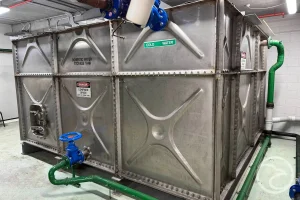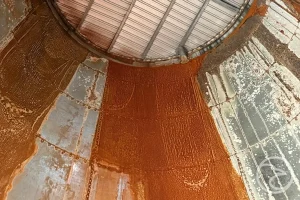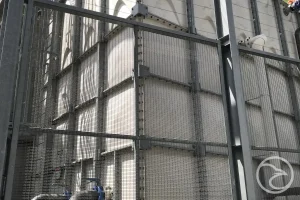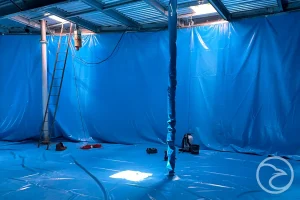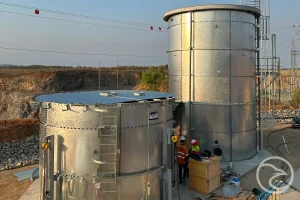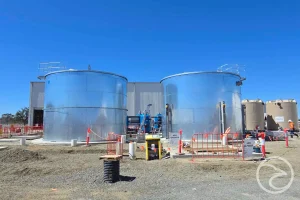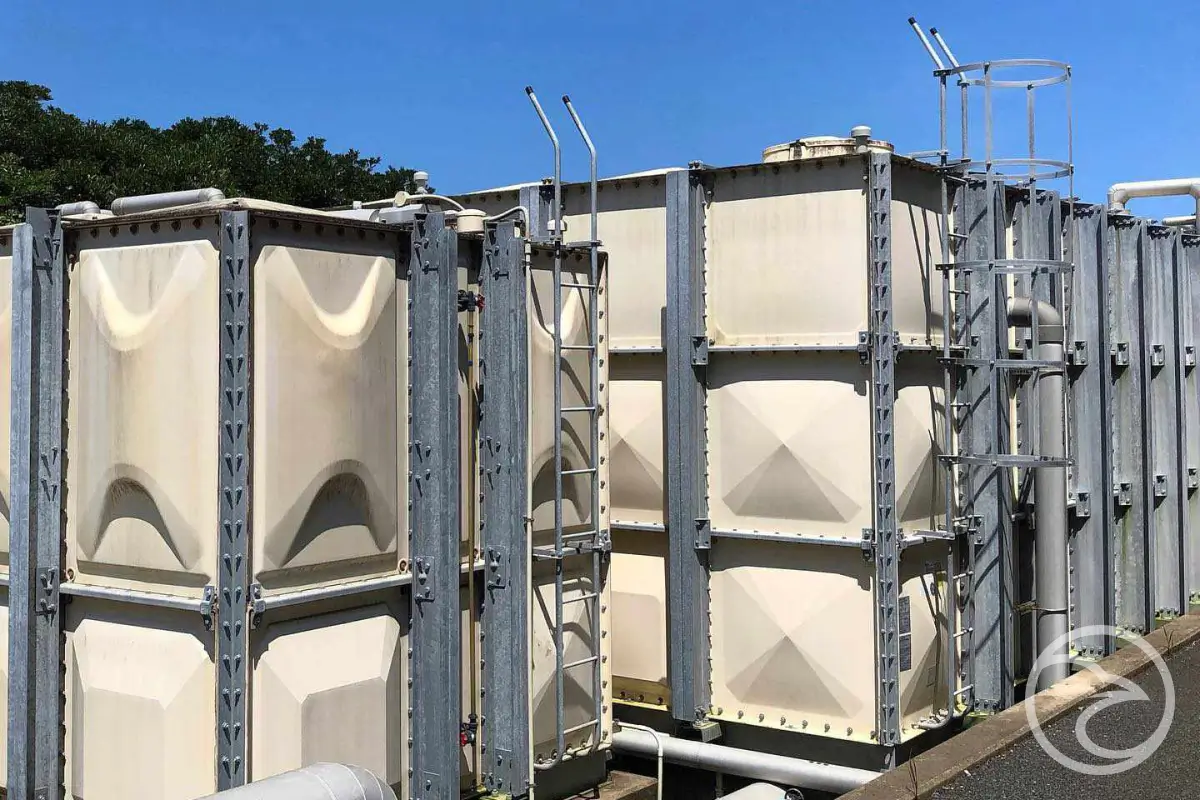
GRP panel tanks are widely used for water storage, but their applications extend beyond standard water systems. Industrial sites often require tanks that operate around chemicals, treatment agents, process water, or corrosive environments. This is where the material properties of GRP become important.
Glass reinforced plastic does not rust like conventional steel. It also provides resistance to many forms of chemical and environmental corrosion. However, chemical resistance is not identical for every GRP panel tank.
The stored liquid, chemical concentration, temperature, panel material, seals, and internal components all affect suitability. Understanding these factors helps determine where GRP panel tanks can provide reliable storage in chemically demanding environments.
Why GRP Panel Tanks Perform Well in Corrosive Environments
GRP panel tanks are constructed from individual glass reinforced plastic panels. These panels are manufactured from glass fibre reinforcement combined with a thermosetting resin system. The combination provides structural strength without relying on exposed steel tank walls.
This creates an important advantage in wet and corrosive environments. Steel can require protective coatings to prevent corrosion. GRP itself does not rust.
This makes GRP panel tanks useful where moisture, treatment chemicals, or industrial conditions could accelerate corrosion. Their resistance is particularly valuable for process water and industrial water storage. However, corrosion resistance and chemical compatibility are not exactly the same thing.
A GRP panel tank can resist general corrosion without being suitable for every concentrated chemical. The complete storage environment must always be considered.
How Chemical Resistance Works in GRP Panel Tanks
The chemical resistance of a GRP panel tank comes primarily from its resin system. The resin binds the glass fibres and forms the surface exposed to the stored liquid. Different resin formulations provide different levels of chemical resistance.
For example, isophthalic polyester resins are commonly used in moulded GRP tank panels. One Australian supplier specifies hot-pressed panels using isophthalic unsaturated polyester resin and glass fibre reinforcement. This type of construction can provide good resistance to water and many moderately corrosive environments.
More demanding chemical conditions may require specialised materials or another tank construction. This distinction matters. A standard GRP panel tank should never be assumed suitable for a chemical simply because GRP is corrosion resistant.
Instead, the panel material must be checked against the intended liquid and operating conditions.
For reliable, corrosion-resistant water storage, explore our GRP panel water tanks designed for demanding commercial and industrial applications.
Where Chemical Resistance Matters for GRP Panel Tanks
Chemical exposure does not only occur inside dedicated chemical processing plants. GRP panel tanks can encounter chemically demanding conditions across many industrial applications.
Process Water Storage
Process water can contain more than water. Its composition may include dissolved minerals, treatment chemicals, salts, residual contaminants, or process additives. These substances can create corrosive conditions for some tank materials.
GRP panel tanks provide a non-rusting storage structure for suitable process water applications. This can make them useful across manufacturing and industrial facilities.
The exact water chemistry still needs to be considered during tank specification.
Water Treatment Facilities
Water treatment processes commonly involve chemical dosing. Chlorination, pH adjustment, coagulation, and other processes can change water chemistry. A storage tank may therefore encounter treated water containing residual chemicals.
GRP panel tanks can be useful where these conditions remain compatible with the panel system. They also avoid corrosion of the main GRP tank surfaces.
This is particularly useful in continuously wet environments.
Industrial Water Systems
Industrial facilities may use stored water for washing, processing, cooling, or equipment operations. The water can collect chemicals or contaminants during these processes.
Storage requirements therefore differ from ordinary potable water systems. GRP panel tanks offer modular storage combined with corrosion-resistant construction.
This combination can be useful where conventional steel surfaces would require additional corrosion protection.
Wastewater and Effluent Applications
Some wastewater streams contain salts, treatment chemicals, or diluted industrial contaminants. These conditions can increase corrosion risks.
GRP materials are commonly used across wastewater and chemical-processing environments because of their corrosion-resistant properties. Australian GRP suppliers also serve wastewater and industrial chemical sectors.
However, wastewater composition can vary significantly. Tank suitability should therefore be assessed using the expected liquid composition rather than the term “wastewater” alone.
For a complete overview of tank design, applications, installation, and maintenance, read our GRP panel water tanks guide.
GRP Panel Tanks Versus Steel in Corrosive Conditions
One major advantage of GRP panel tanks is their inherent resistance to rust. Steel requires protection from water and corrosive environments. Depending on the system, this protection may involve galvanising, coatings, liners, or other protective treatments.
Damage to a protective layer can expose the underlying steel. GRP behaves differently because corrosion resistance is part of the composite material itself. There is no steel tank wall beneath the GRP panel.
This can reduce concerns associated with rusting tank surfaces. GRP also has a high strength-to-weight ratio. The panels remain relatively lightweight while providing structural strength.
This combination makes sectional GRP tanks practical for large storage installations. Their modular construction also allows tanks to be assembled in locations with restricted access.
Chemical resistance is therefore only one part of their industrial value.
Why GRP Panel Tanks are Different From One-Piece Chemical Tanks
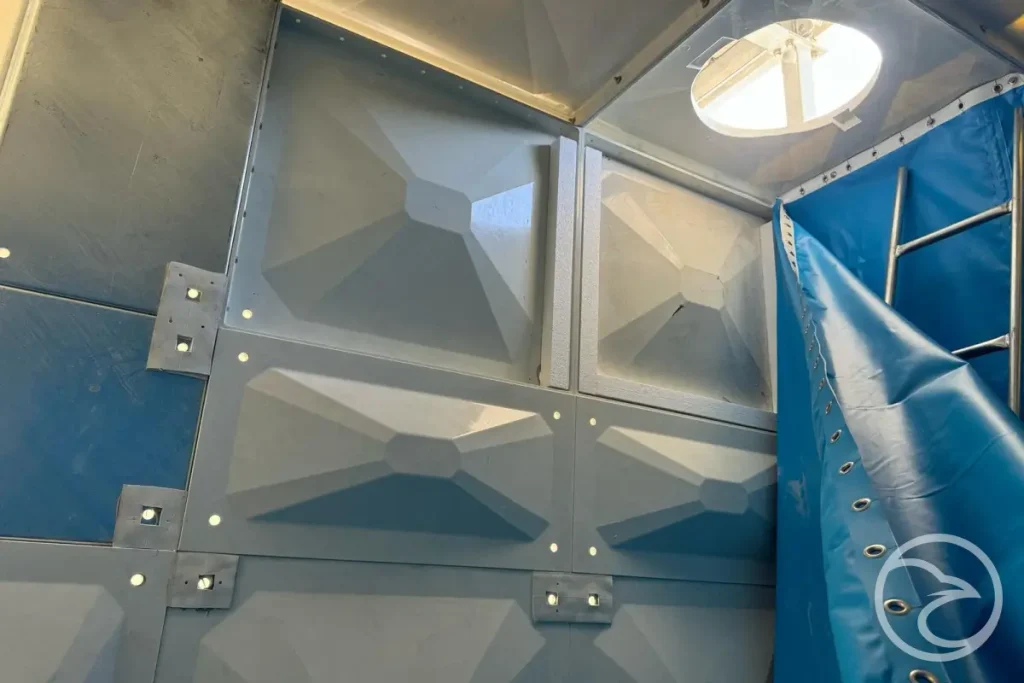
This distinction is important when discussing chemical resistance. A GRP panel tank consists of multiple moulded panels connected on site. The tank includes joints, sealing materials, bolts, supports, and other components.
A fabricated chemical tank may use a different construction method. Some purpose-built GRP chemical tanks include specialised internal corrosion-resistant layers. Others use vinyl ester or other resin systems selected for a particular chemical.
For example, purpose-built GRP chemical tanks can use specialised resin barriers for demanding chemical environments. Standard GRP panel tanks should not automatically be treated as equivalent to these systems.
The panel tank must be considered as a complete assembly. That means chemical compatibility extends beyond the GRP panel itself.
The Entire Panel Tank System Mmust be Chemically Compatible
A GRP panel may perform well while another tank component does not. This is especially important in sectional tank construction.
The stored liquid can contact several materials.
These may include:
- GRP panels;
- joint sealants;
- gaskets;
- bolts and fasteners;
- internal supports;
- pipe connections;
- valves;
- washers;
- fittings.
Each component can have different chemical resistance. For example, a chemical may be compatible with the GRP surface but unsuitable for a particular gasket material. The same issue can affect metallic internal components.
This means chemical resistance should be assessed across the complete tank system. Focusing only on the GRP panels can give an incomplete picture.
What Determines the Chemical Resistance of a GRP Panel Tank?
Several factors determine whether a panel tank is suitable for a particular environment.
1. The Stored Liquid
The first consideration is the actual liquid entering the tank. Process water and concentrated chemical solutions create very different conditions.
The exact chemical composition should be known where possible.
2. Chemical Concentration
Concentration can change material compatibility. A diluted chemical may create relatively mild exposure.
The same chemical at a higher concentration may require another material specification. Chemical resistance should therefore never be assessed from the chemical name alone.
3. Temperature
Temperature also affects chemical resistance. Higher temperatures can increase chemical interaction with polymer materials.
A tank suitable at ambient temperature may not provide the same performance with heated liquids. Operating temperature should therefore be included in the assessment.
4. Exposure Duration
Continuous storage creates different conditions from occasional exposure. GRP panel tanks normally remain in contact with stored liquids for extended periods.
Long-term compatibility is therefore more important than short-term splash resistance.
5. Resin System
The resin system influences how the GRP panel responds to chemical exposure. Different polyester and vinyl ester systems provide different resistance characteristics.
Published GRP compatibility information shows substantial differences between resin types and chemical environments. The resin used in the actual panel should therefore be considered.
6. Seals and Tank Components
Sectional construction introduces additional materials into the storage system. These components must tolerate the same environment as the panels.
This factor becomes increasingly important as chemical exposure becomes more aggressive.
Are GRP Panel Tanks Suitable for Chemical Storage?
This requires a careful distinction. GRP panel tanks can be suitable for selected chemical and chemically affected liquid applications. They should not be described as universal chemical storage tanks.
Their strongest applications often involve water-based liquids and industrial environments where corrosion resistance is important.
Examples can include:
- process water;
- treated water;
- industrial water;
- selected wastewater;
- water containing compatible treatment chemicals;
- selected diluted chemical solutions.
Suitability becomes more application-specific as chemical concentration and aggressiveness increase. Dedicated chemical storage may require specialised resin systems, corrosion barriers, or purpose-built tank construction.
This is why “GRP is chemical resistant” should never become “GRP stores every chemical.” The first statement describes a useful material property.
The second ignores the limits of the complete tank system.
Chemical Resistance and the Modular Design of GRP Panel Tanks
Chemical resistance is not the only reason GRP panel tanks are used industrially. Their modular construction provides another important advantage. Individual panels can be transported separately and assembled at the installation site.
This allows large tanks to be installed inside buildings or restricted-access areas. Tank dimensions can also be configured around available space. Some sectional GRP systems cover capacities from relatively small tanks to very large storage installations.
This flexibility can be valuable at industrial and water treatment facilities.
A facility can therefore combine:
- corrosion-resistant GRP construction;
- large storage capacity;
- modular installation;
- flexible tank dimensions;
- relatively lightweight panels.
These characteristics explain why GRP panel tanks are useful beyond conventional potable water storage.
When Chemical Compatibility Needs Closer Assessment
Some applications require more detailed evaluation before specifying a GRP panel tank. This is particularly important when the liquid contains aggressive chemicals.
Closer assessment may also be required when:
- chemical concentrations are high;
- storage temperatures are elevated;
- liquid composition changes frequently;
- several chemicals are mixed;
- solvents are present;
- strong oxidising chemicals are present;
- industrial effluent composition is uncertain.
Chemical compatibility guides can provide useful initial information. However, their recommendations normally depend on concentration, temperature, exposure, additives, and other conditions.
For demanding applications, the tank manufacturer should confirm the suitability of the complete panel system.
GRP Panel Tanks as a Corrosion-Resistant Storage Solution
The value of GRP panel tanks comes from combining material performance with practical tank construction. GRP does not depend on a conventional steel wall for containment. The panels provide both structural performance and resistance to rust.
This makes GRP panel tanks attractive for industrial environments where corrosion is a continuing concern. Their modular format also allows large tanks to be installed where one-piece tanks would be difficult to transport.
Chemical resistance expands their potential applications further. However, it should always be considered within the limits of the actual panel and tank system.
For process water, treated water, and selected chemically affected liquids, GRP can provide an effective storage solution. More aggressive chemical storage requires closer assessment of materials, seals, components, concentration, and temperature.
The key question is therefore not whether GRP panel tanks are chemical resistant. The better question is whether a particular GRP panel tank is compatible with the intended storage environment.
That approach leads to safer material selection and more reliable long-term tank performance.
Conclusion
GRP panel tanks offer a practical solution where corrosion resistance is important for liquid storage. Their GRP construction does not rust and can withstand many demanding industrial and water treatment environments. Chemical resistance, however, depends on more than the GRP panels themselves.
The stored liquid, concentration, temperature, resin system, seals, and internal components all influence compatibility. For process water, treated water, and selected chemical solutions, GRP panel tanks can provide reliable long-term storage. More aggressive chemicals may require specialised materials or purpose-built chemical storage tanks.
For this reason, every application should be assessed against its actual operating conditions. Correct material selection helps maintain tank performance while reducing risks associated with corrosion and chemical exposure.