Fire sprinkler systems are designed to provide reliable fire protection for many years. However, like any water-based infrastructure, they are vulnerable to deterioration over time. When leaks develop, they can compromise system performance, increase maintenance costs, and contribute to property damage.
Understanding the causes of fire sprinkler leaks helps property owners identify potential risks early and implement preventative maintenance strategies before small issues become major failures. Combined with effective fire sprinkler leak detection, this proactive approach can reduce water loss, minimize damage, and support long-term system reliability.
Why Fire Sprinkler Leaks Should Never be Ignored
A leak may begin as a minor issue, but even small amounts of water loss can create long-term problems.
Leaks can contribute to:
- Corrosion of system components
- Water damage to buildings
- Reduced system reliability
- Increased maintenance costs
- Premature equipment failure
Recognizing the source of a leak is often the first step toward preventing more extensive damage.
If you suspect a leak is already developing, learn how to identify the warning signs in signs of a fire sprinkler leak you should never ignore.
Corrosion Within Pipes and Components
Corrosion is one of the most common causes of fire sprinkler leaks. Over time, moisture, oxygen, and mineral deposits can gradually weaken metal surfaces. As corrosion progresses, pipe walls may thin and eventually develop small openings that allow water to escape.
Corrosion-related leaks are particularly common in older systems where components have been exposed to decades of service conditions.
Regular inspections can help identify corrosion before it affects system integrity.
Aging Infrastructure
All fire protection systems experience wear as they age. Pipes, fittings, valves, and storage components gradually deteriorate through normal operation. Even when systems appear functional, aging materials may become more vulnerable to cracking, corrosion, and mechanical failure.
As infrastructure approaches the end of its service life, the likelihood of leaks often increases. Property owners should monitor older systems carefully and assess whether refurbishment may be necessary.
Pressure Fluctuations and Water Hammer
Sudden pressure changes place significant stress on sprinkler system components. Pressure surges can occur when valves operate abruptly or when water flow changes unexpectedly. Repeated pressure fluctuations may weaken joints, fittings, and pipe connections over time.
In some cases, a phenomenon known as water hammer creates shockwaves throughout the system. These forces can contribute to leaks and mechanical damage if not properly controlled.
Maintaining stable operating conditions helps reduce unnecessary stress on the network.
Poor Installation Practices
Installation quality has a direct impact on long-term system performance. Incorrectly fitted joints, inadequate sealing, improper pipe support, or poorly aligned components may create weak points within the system.
While installation-related issues may not become immediately apparent, they can contribute to leakage months or even years later.
Professional installation and routine inspections help reduce these risks.
Damaged Valves and Fittings
Valves and fittings experience regular mechanical stress throughout the life of a fire sprinkler system. Over time, seals may deteriorate, components may loosen, or moving parts may wear down. These issues can create opportunities for water to escape.
Because valves and fittings are common leak locations, they should be inspected regularly as part of a preventative maintenance program.
Early detection often prevents more extensive repairs.
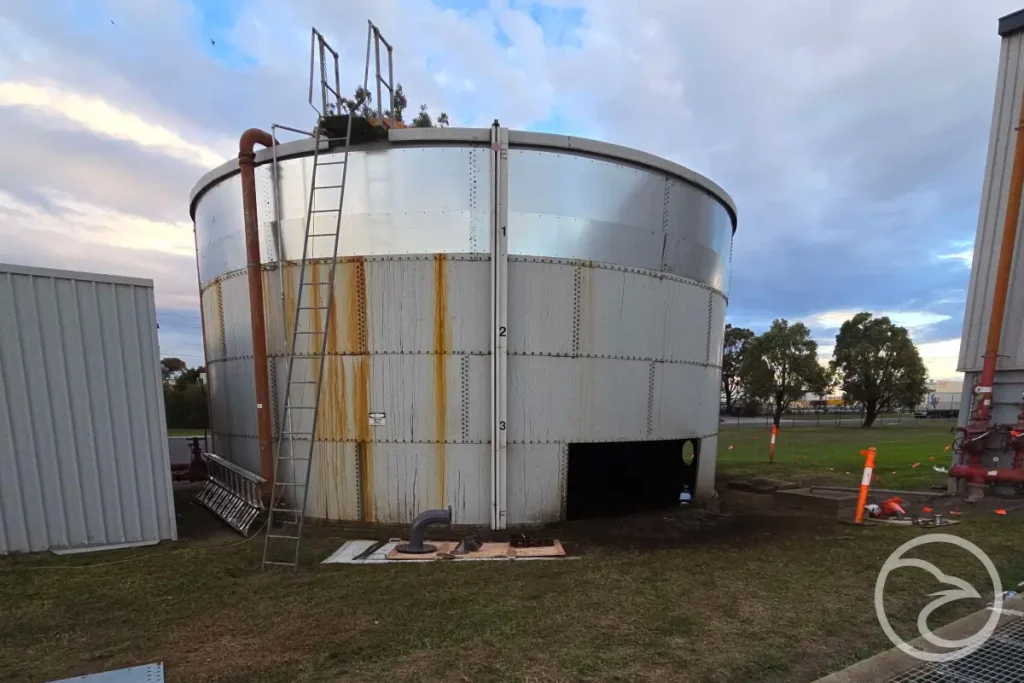
Fire Water Tank Deterioration
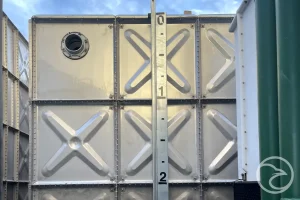
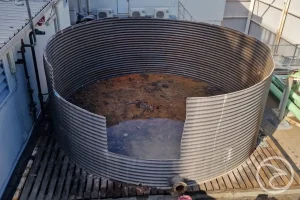
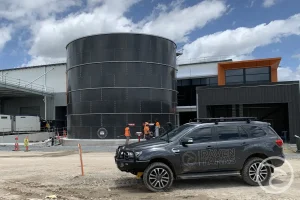
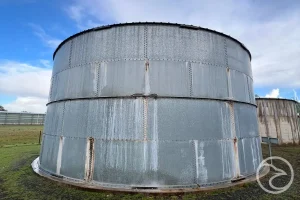
Not all sprinkler system leaks originate within the pipe network itself. Fire water tanks can also contribute to water loss when structural deterioration develops over time. Cracks, corrosion, and other forms of damage may allow water to escape before it reaches the sprinkler system.
Monitoring tank condition is an important part of maintaining overall fire protection reliability. Property owners can learn more in warning signs of structural damage in fire water tanks.
Tank Liner Failure
Tank liners provide an essential barrier that helps prevent leaks and protects tank structures from moisture-related deterioration.
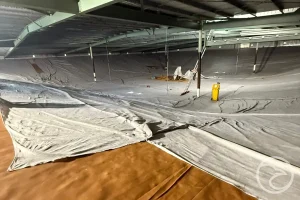
However, liners are exposed to continuous environmental and operational stresses. As they age, they may develop seam failures, punctures, cracking, or material degradation.
Once a liner begins to fail, water loss can occur gradually and remain difficult to detect. For a detailed explanation of this process, see how fire water tank liners become damaged over time.
Lack of Preventative Maintenance
Many leaks develop because small problems remain unnoticed for extended periods. Without routine inspections, early signs of deterioration may go undetected until significant damage occurs.
Preventative maintenance programs help identify:
- Corrosion
- Loose fittings
- Damaged seals
- Pressure irregularities
- Tank-related issues
Addressing these concerns early often reduces repair costs and extends system lifespan.
Environmental and External Factors
External conditions can also contribute to sprinkler system leaks.
Common factors include:
- Temperature fluctuations
- Ground movement
- Vibration from nearby equipment
- Chemical exposure
- Moisture-related corrosion
Although these influences may seem minor individually, their cumulative effect can weaken system components over time. Regular assessments help identify environmental conditions that may accelerate deterioration.
Understanding the Root Cause is Essential
Not all leaks develop for the same reason. While some result from aging infrastructure, others may stem from corrosion, pressure-related damage, installation defects, or deteriorating tank components.
Identifying the root cause is critical for selecting the most effective repair strategy and preventing recurring problems.
In many cases, addressing the visible leak alone is not enough. The underlying issue must also be resolved to ensure long-term reliability.
Final Thoughts
Understanding the causes of fire sprinkler leaks allows property owners to take a proactive approach to system maintenance. Corrosion, aging infrastructure, pressure fluctuations, installation issues, and tank deterioration can all contribute to water loss and reduced performance.
Regular inspections, preventative maintenance, and timely repairs help minimize risks and protect critical fire protection assets. By addressing the underlying causes of leaks early, facilities can improve system reliability and avoid costly future failures.