Reliable water storage is a critical component of any fire protection system. Fire pumps, hydrants, and sprinkler networks all depend on a stable water supply during emergencies. Because of this, choosing the right tank material plays an important role in long-term system reliability.
Two of the most common options used in fire safety infrastructure are GRP fire tanks and steel fire tanks. Each material offers specific advantages depending on the project requirements, environmental conditions, and installation constraints.
This article compares GRP vs steel fire tanks and explains the key differences that engineers and facility managers should consider when selecting a fire water storage solution.
What is a GRP Fire Water Tank?
A GRP fire water tank is manufactured from Glass Reinforced Plastic, a composite material created by combining resin with reinforced glass fibres. This structure produces a lightweight but strong material that performs well in water storage applications.
GRP tanks are typically designed as modular panel systems. Individual panels are assembled on site to create a tank with the required capacity. This modular construction allows tanks to be installed in restricted spaces or on rooftops where traditional tanks may be difficult to position.
One of the main advantages of GRP tanks is their natural resistance to corrosion. Unlike metal tanks, GRP structures do not rust when exposed to moisture or humid environments. This makes them a popular solution for long-term water storage in fire protection systems.
GRP tanks are commonly used in:
- commercial buildings
- hospitals and public facilities
- industrial plants
- infrastructure projects requiring reliable water storage
Their durability and relatively low maintenance requirements make them a practical option for many fire protection installations.
What is a Steel Fire Water Tank?
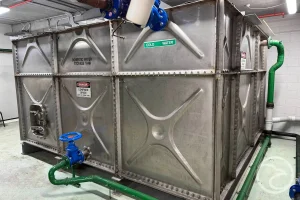
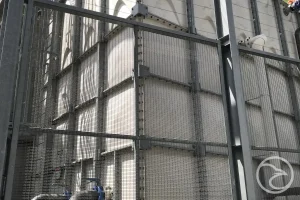
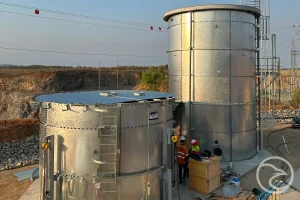
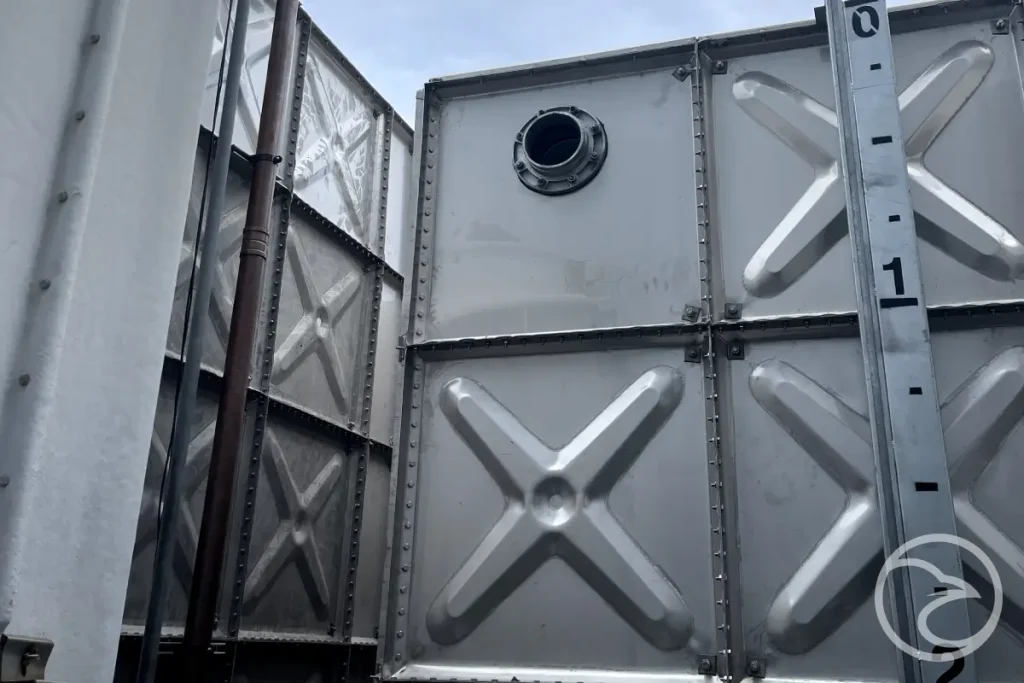
Steel fire water tanks are widely used in large-scale firefighting systems. These tanks are typically constructed from welded or bolted steel plates designed to withstand significant structural loads.
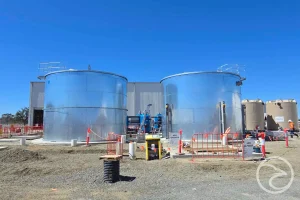
Because steel is a very strong material, these tanks can be manufactured in extremely large capacities. This makes them suitable for major industrial sites, municipal water storage, or facilities that require large volumes of emergency water supply.
However, steel tanks require additional protection against corrosion. Depending on the design, they may be coated with protective layers, galvanised, or lined internally to prevent rust and maintain water quality.
Despite the need for maintenance, steel tanks remain a reliable option for projects where structural strength and large storage capacity are essential.
GRP vs Steel Fire Tanks: Key Differences
When comparing GRP vs steel fire tanks, several factors influence the final choice. These include corrosion resistance, installation requirements, long-term maintenance, and structural performance.
| Feature | GRP Tanks | Steel Tanks |
|---|---|---|
| Corrosion resistance | Excellent | Requires protective coatings |
| Weight | Lightweight | Heavy |
| Installation | Modular assembly | Fabricated or welded |
| Maintenance | Low maintenance | Regular inspections required |
| Capacity | Medium to large | Suitable for very large tanks |
| Durability | Long service life | Very strong structural performance |
GRP tanks are often preferred where corrosion resistance and easier installation are priorities. Steel tanks, on the other hand, are commonly used for very large storage capacities and heavy-duty infrastructure.
Which Tank is Better for Fire Protection Systems?
There is no single solution that fits every fire protection project. The choice between GRP and steel tanks usually depends on the operational requirements of the facility.
For many commercial buildings and infrastructure projects, GRP tanks provide an efficient balance between durability, corrosion resistance, and installation flexibility. Their modular construction allows engineers to adapt the tank size according to the available space.
Steel tanks are often selected for large industrial environments where extremely high storage volumes are required. Their structural strength makes them suitable for demanding applications such as refineries, power plants, or municipal fire water systems.
Both materials can provide reliable water storage when properly designed and maintained.
When to Choose GRP Fire Tanks
GRP fire tanks are particularly suitable in situations where corrosion resistance and flexible installation are important considerations.
They are commonly chosen for projects where:
- the tank will be installed in humid or coastal environments
- installation space is limited
- lightweight structures are required
- long-term maintenance needs to be minimized
Because GRP tanks do not rust and require fewer protective coatings, they can offer lower maintenance costs over the life of the system.
These advantages make GRP tanks a practical solution for many modern fire protection installations. Many modern facilities rely on GRP tanks because they provide corrosion resistance and reliable performance in demanding environments.
When Steel Fire Tanks are the Better Option
Steel tanks remain a strong option for projects that require large-scale water storage and high structural strength.
They are often preferred when:
- very large water capacities are required
- the installation site allows heavy construction equipment
- industrial standards require specific tank designs
- structural durability is the primary priority
In these cases, steel tanks can provide reliable long-term water storage when properly protected against corrosion.
In large buildings and industrial sites, fire protection tanks serve as the primary water source for firefighting systems.
Conclusion
Selecting the right tank material is an important step in designing effective fire protection infrastructure. Both GRP and steel tanks offer advantages depending on the specific requirements of the project.
The comparison of GRP vs steel fire tanks shows that GRP tanks provide excellent corrosion resistance, modular installation, and lower maintenance needs. Steel tanks, meanwhile, deliver high structural strength and are suitable for very large water storage capacities.
Understanding these differences helps engineers and facility managers choose the most appropriate water storage solution for their fire protection systems.