Reliable water storage is one of the most important components of any fire protection strategy. During an emergency, fire suppression systems depend on immediate access to sufficient water reserves. Without a dependable water supply, even the most advanced fire protection equipment may not perform as intended.
For many facilities, dedicated fire water storage is essential. Commercial buildings, industrial sites, warehouses, hospitals, and infrastructure projects often require a reserve water supply that remains available when needed.
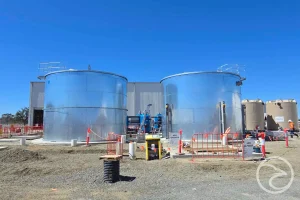
Among the available storage solutions, GRP tanks have become a popular choice for fire protection applications. Their durability, corrosion resistance, and flexible design make them suitable for a wide range of projects.
This guide explains why GRP tanks are commonly used in fire protection systems and what factors should be considered when selecting a fire water storage solution.
Why Fire Protection Systems Require Dedicated Water Storage
Many fire protection systems cannot rely entirely on municipal water supplies. Water pressure may fluctuate during emergencies, and some facilities operate in locations where public infrastructure cannot provide sufficient capacity.
Dedicated water storage helps ensure:
- Immediate access to emergency water
- Consistent fire suppression performance
- Improved operational resilience
- Compliance with project requirements
- Enhanced protection of assets and occupants
As a result, fire water storage tanks are often integrated into broader fire protection systems.
What are GRP Tanks?
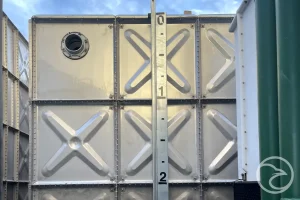
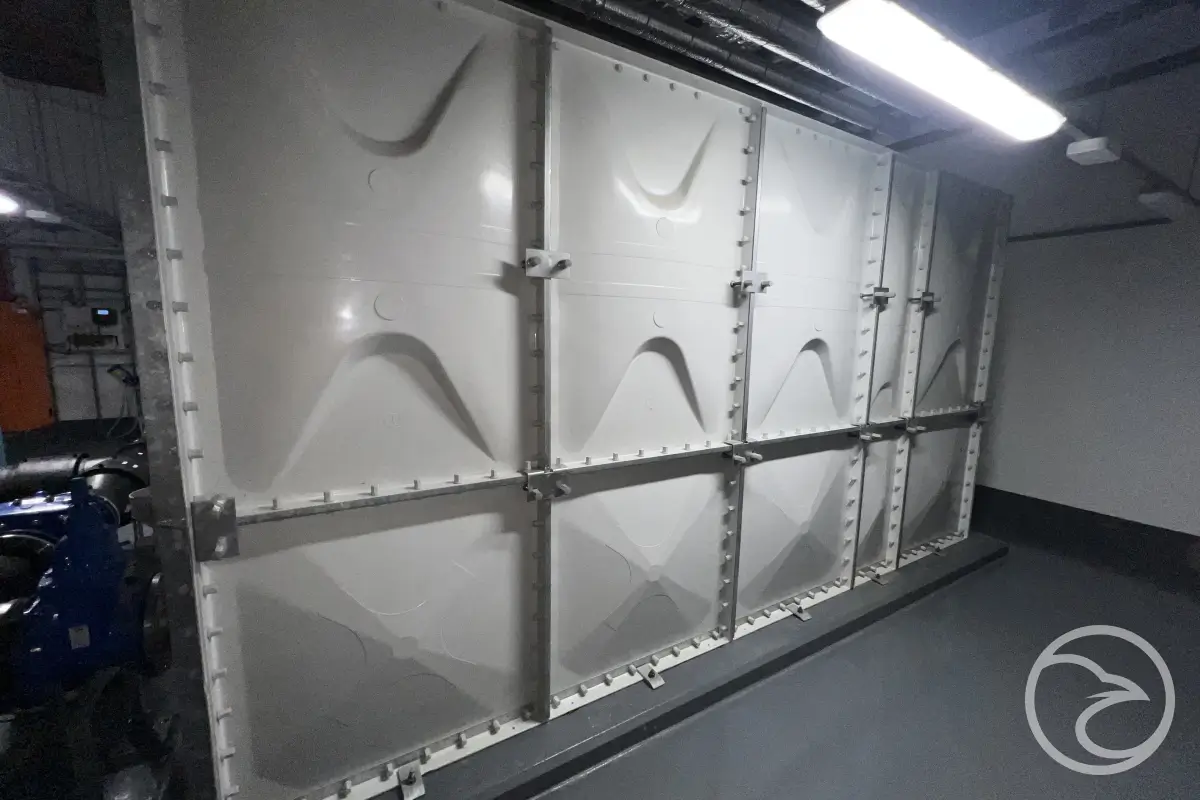
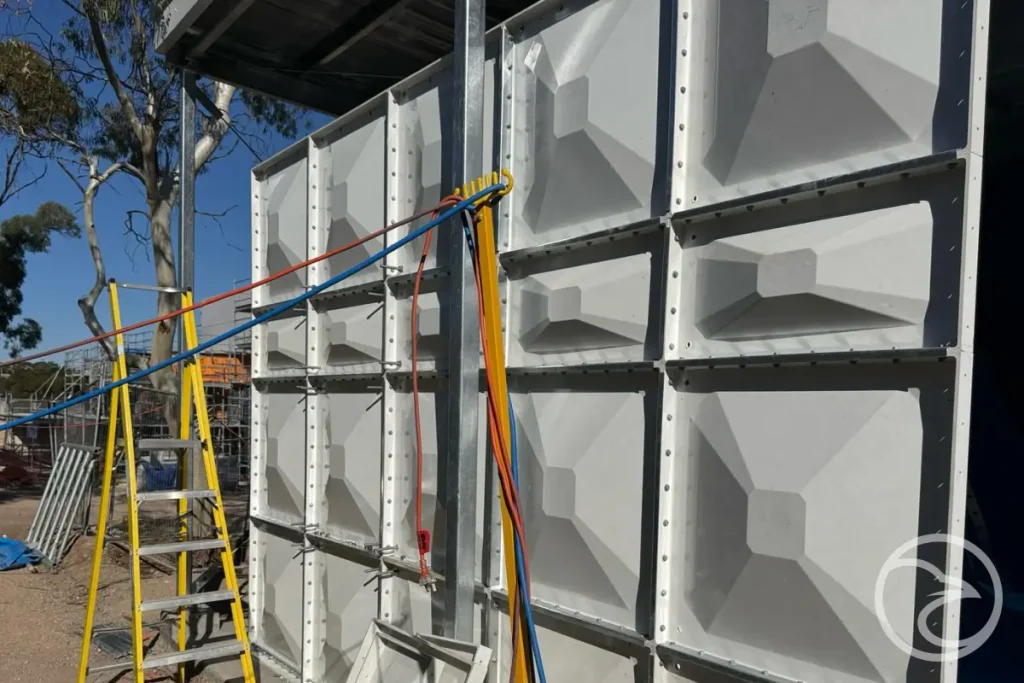
GRP tanks are modular storage systems manufactured from Glass Reinforced Plastic. Individual panels are assembled on site to create a complete storage structure. This modular design allows tanks to be customised to suit specific project requirements.
As explained in what are GRP panel tanks?, GRP materials combine strength, durability, and corrosion resistance, making them particularly suitable for long-term water storage applications.
These characteristics have contributed to the widespread use of GRP tanks across numerous industries.
Benefits of GRP Tanks for Fire Protection Systems
Fire protection infrastructure must remain reliable throughout its operational life. Several characteristics make GRP tanks well suited to emergency water storage applications.
Corrosion Resistance
Water storage tanks are constantly exposed to moisture. Unlike some traditional materials, GRP does not rust or corrode when exposed to water.
This resistance helps reduce maintenance requirements and supports long-term reliability.
Long Service Life
Fire protection systems are designed to provide dependable performance for many years. GRP tanks offer excellent durability and can remain in service for decades when properly maintained.
Their resistance to environmental deterioration contributes to long-term asset value.
Low Maintenance Requirements
Maintenance costs are an important consideration for facility owners. GRP tanks generally require less maintenance than many alternative materials because they are not susceptible to corrosion-related degradation.
Routine inspections remain important, but major maintenance interventions are often less frequent.
Flexible Storage Capacity
Fire protection projects vary significantly in scale. The modular design of GRP tanks allows storage capacity to be tailored to project requirements.
This flexibility supports both small commercial developments and large industrial facilities.
Lightweight Construction
Compared with some traditional tank materials, GRP is relatively lightweight. This can simplify transportation and installation while reducing structural loading requirements.
Common Applications for GRP Fire Water Tanks
GRP tanks are used in a wide range of fire protection projects.
Common applications include:
- Commercial buildings
- Warehouses
- Manufacturing facilities
- Hospitals
- Educational institutions
- Data centres
- Industrial plants
- Municipal infrastructure
Each facility may require different storage capacities depending on risk assessments and fire protection system design.
Why Water Quality Still Matters
Although fire water is not intended for drinking purposes, maintaining water quality remains important.
Poor water quality can contribute to:
- Sediment accumulation
- Pump performance issues
- Blockages within fire systems
- Increased maintenance requirements
Routine inspections help ensure stored water remains suitable for emergency use.
Key Design Considerations
Selecting a fire water storage tank involves more than simply choosing a storage volume. Several technical factors should be considered during project planning.
Required Capacity
Storage requirements depend on:
- Building size
- Occupancy type
- Hazard classification
- Fire suppression system design
- Regulatory requirements
Proper sizing is critical for effective emergency response.
Installation Location
The installation environment can influence design decisions.
Factors may include:
- Site access
- Available space
- Environmental conditions
- Foundation requirements
Early planning helps avoid installation challenges later in the project.
Future Expansion
Many facilities expand over time. The modular nature of GRP tanks can provide opportunities for future capacity increases where appropriate.
Maintenance Access
Safe access for inspections and maintenance should be considered during design.
This includes:
- Access hatches
- Ladders
- Platforms
- Safety systems
Proper access supports efficient long-term asset management.
Compliance and Regulatory Considerations
Fire protection systems are typically subject to local regulations and engineering requirements. Specific requirements vary between jurisdictions and project types.
Project teams should consider:
- Fire protection regulations
- Water storage requirements
- Structural design requirements
- Inspection obligations
- Maintenance procedures
Working with qualified engineers and fire protection specialists helps support compliance throughout the project lifecycle. Compliance with Australian Standards for GRP tanks can support reliable operation while helping organisations meet industry and project-specific requirements.
Inspection and Maintenance
Even highly durable storage systems require regular inspections.
Routine inspections help identify:
- Joint deterioration
- Structural concerns
- Access system issues
- Water quality problems
- Mechanical damage
Preventive maintenance can improve reliability and help maximise service life. Maintaining a documented inspection program is considered best practice for critical fire protection assets.
GRP Tanks Compared with Other Fire Water Storage Solutions
Several materials are commonly used for fire water storage.
These include:
- Steel tanks
- Concrete tanks
- Polyethylene tanks
- GRP tanks
Each option offers unique advantages. GRP tanks are often selected because they combine corrosion resistance, low maintenance requirements, and flexible design options.
The most suitable solution depends on project-specific requirements and operational objectives.
Why Reliability is Critical
Fire water storage systems may remain unused for extended periods. However, when an emergency occurs, immediate performance is essential.
For this reason, reliability is one of the most important selection criteria when evaluating fire water storage infrastructure. A properly designed and maintained GRP tank can provide dependable emergency water storage for many years.
Conclusion
Dedicated water storage is a critical component of effective fire protection systems. Reliable access to emergency water can significantly improve system performance and support the protection of people, property, and operations.
GRP tanks offer several advantages for fire water storage, including corrosion resistance, long service life, low maintenance requirements, and flexible design options.
These characteristics make them a practical solution for commercial, industrial, and infrastructure projects that require dependable emergency water reserves.
When properly designed, installed, and maintained, GRP tanks can provide long-term support for fire protection strategies and critical water storage requirements.