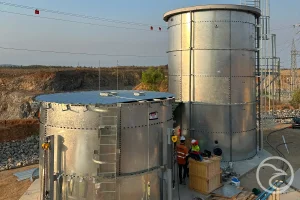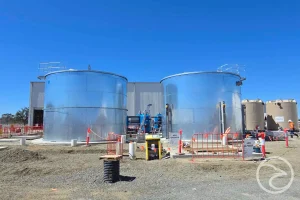
Fire water tanks play an essential role in protecting Australian buildings, industrial facilities, and commercial properties. Over time, these tanks can develop corrosion, leaks, structural damage, or deteriorating liners.
When problems appear, property owners must decide whether to refurbish the existing tank or replace it entirely. Both options can restore reliable water storage, but their costs, requirements, and long-term benefits differ.
Fire water tank refurbishment can extend the service life of a structurally sound tank through targeted repairs and component replacement. However, extensive structural deterioration or outdated system requirements may make replacement the more suitable option.
Understanding these differences helps facility managers make informed maintenance decisions.
This guide compares fire tank refurbishment and replacement, including common warning signs, repair options, costs, and important Australian compliance considerations.
What is Fire Water Tank Refurbishment?
Fire water tank refurbishment involves restoring an existing tank to a suitable operational condition without replacing the entire structure. The work typically focuses on damaged, worn, or deteriorating components. Depending on the tank’s condition, refurbishment may involve structural repairs, liner replacement, corrosion treatment, or fitting upgrades.
Unlike complete replacement, refurbishment retains suitable parts of the existing installation.
Common fire water tank refurbishment activities include:
-
Repairing damaged steel panels and structural connections.
-
Replacing deteriorated tank liners.
-
Treating corrosion on accessible metal surfaces.
-
Repairing leaking joints and seals.
-
Replacing damaged bolts and fittings.
-
Restoring protective coatings where appropriate.
-
Repairing or replacing damaged roof components.
-
Addressing localised structural deterioration.
The refurbishment scope depends on the tank’s construction, existing damage, and required performance. For example, a galvanised steel tank with a damaged liner may remain structurally sound. Replacing the liner could restore watertight containment without replacing the entire tank.
However, refurbishment cannot resolve every problem. Severe structural deterioration, extensive foundation damage, or unsuitable tank capacity may require more substantial work.
A detailed condition assessment helps determine whether the existing tank can be safely restored.
Fire Tank Refurbishment vs Replacement: Key Differences
Fire tank refurbishment and replacement both address deteriorating water storage systems. However, they involve different levels of work, costs, and operational disruption.
Refurbishment focuses on restoring suitable existing components. Replacement involves removing the old tank and installing a new water storage system.
The better option depends on the tank’s condition and the requirements of the connected fire protection system.
Fire Tank Refurbishment vs Replacement Comparison
|
Factor |
Refurbishment |
Replacement |
|---|---|---|
|
Main purpose |
Restore an existing tank |
Install a new tank |
|
Structural condition |
Requires suitable retained components |
Appropriate when the existing structure cannot be retained safely |
|
Initial cost |
Often lower for limited repairs |
Usually higher due to new materials and installation |
|
Project duration |
Depends on repair complexity |
Depends on removal, construction, and commissioning |
|
Existing foundation |
May be retained if suitable |
May require assessment or modification |
|
Tank liner |
Can often be repaired or replaced |
Supplied as part of the new system, where applicable |
|
Design changes |
Usually more limited |
Greater opportunity to change capacity or configuration |
|
Service life |
Depends on remaining components and repairs |
Depends on the new tank design and maintenance |
|
Operational disruption |
Depends on drainage and repair requirements |
May require a longer planned interruption |
These comparisons are general. Actual outcomes depend on engineering requirements, site conditions, and project scope.
When Refurbishment Offers Advantages
Refurbishment may provide a practical solution when the tank’s main structure remains serviceable. Repairing selected components can reduce material requirements and avoid unnecessary replacement of suitable structures.
It may also reduce the need for extensive site modifications. However, these advantages depend on the extent of deterioration and accessibility.
When Replacement Offers Advantages
Replacement may be preferable when the existing tank has extensive structural damage or unsuitable design characteristics. A new installation can also provide an opportunity to improve capacity, configuration, and maintenance access.
However, replacement usually involves additional planning, materials, and installation work. The decision should consider both immediate project costs and long-term operational requirements.
Signs Your Fire Water Tank may need Refurbishment
Fire water tanks can deteriorate gradually, even when they remain operational. Identifying damage early may allow targeted repairs before more extensive deterioration develops.
The following warning signs can indicate that fire water tank repairs or refurbishment should be considered.
1. Visible Corrosion and Rust
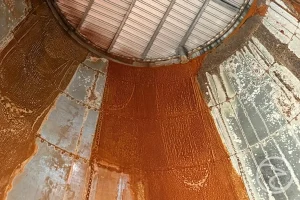
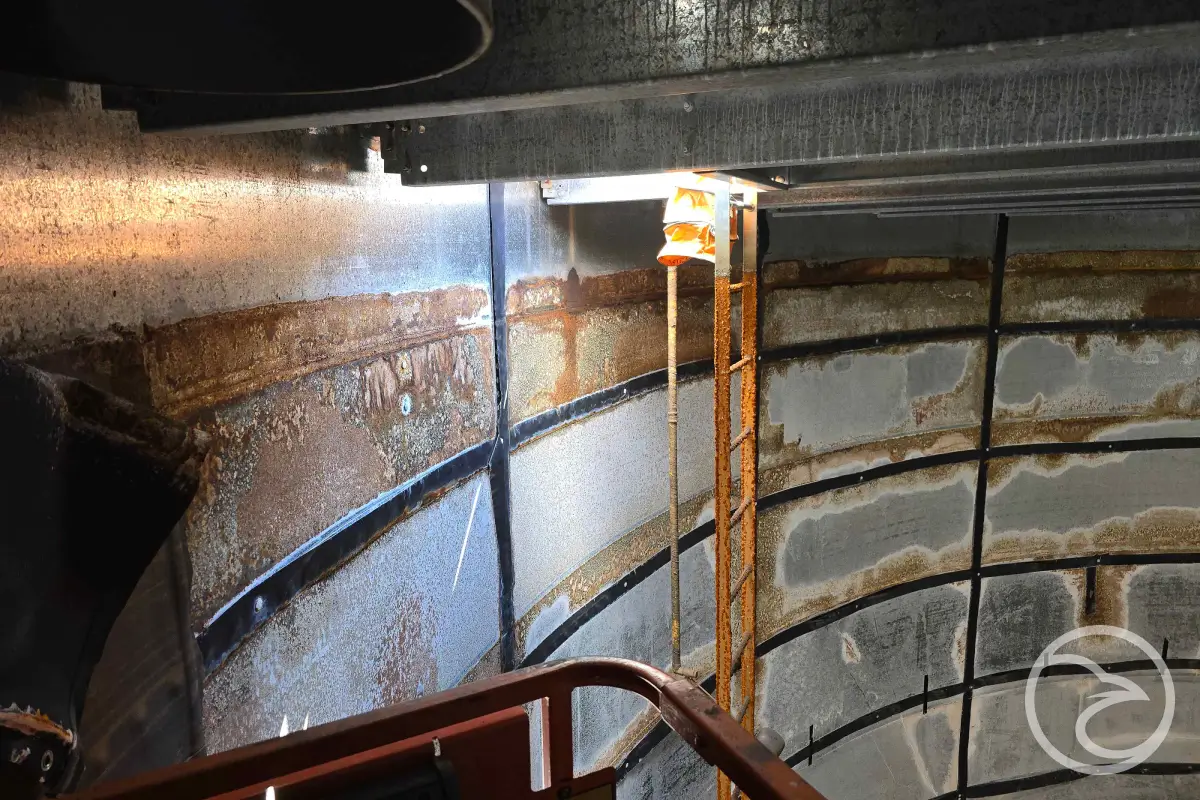
Corrosion is a common concern for steel fire water tanks. It can develop when protective coatings deteriorate or metal surfaces remain exposed to moisture.
Early corrosion may appear as surface rust or discolouration. More advanced deterioration can involve material loss, weakened connections, or damaged panels.
Warning signs include:
-
Rust around bolts and panel joints.
-
Corrosion near pipe connections.
-
Deteriorating galvanised coatings.
-
Flaking or damaged protective finishes.
-
Localised corrosion around structural supports.
Minor corrosion may be manageable through suitable treatment and protective measures. However, extensive material loss can compromise structural integrity.
The severity and location of corrosion determine whether refurbishment remains appropriate.
To understand how corrosion affects tank integrity and long-term performance, explore our fire tank corrosion: common problems and risk factors guide.
2. Water Leaks and Damaged Seals
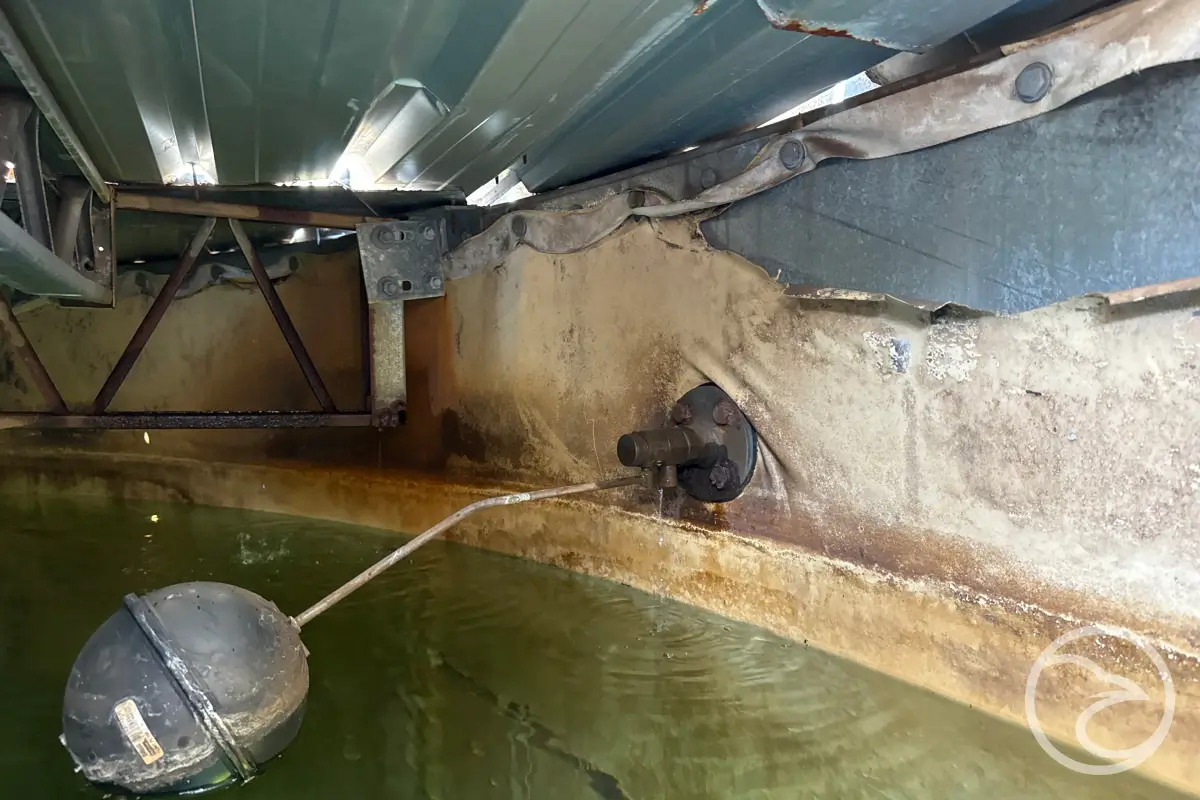
Water leakage can reduce the stored supply available for firefighting systems. Leaks may develop around panel joints, pipe connections, damaged liners, or deteriorated sealing materials.
Common indicators include:
-
Persistent moisture around the tank base.
-
Water escaping through panel joints.
-
Unexpected reductions in stored water levels.
-
Repeated operation of refill equipment.
-
Damp areas around pipe penetrations.
Not every reduction in water level indicates tank leakage. Connected pipework, valves, or operational water use may also affect stored water levels.
The source should be identified before selecting a repair method. Localised leakage may be resolved through suitable sealing repairs or component replacement.
Learn how to recognise potential tank problems before they become serious in our preventing fire tank failures: early warning signs guide.
3. Deteriorating Tank Liners
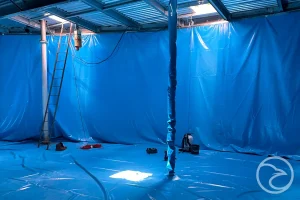
Many fire water tanks use flexible liners to maintain watertight containment. These liners can deteriorate through ageing, mechanical damage, or prolonged exposure to operating conditions.
Potential warning signs include:
-
Tears or punctures in liner material.
-
Damaged or separating seams.
-
Unusual liner movement or displacement.
-
Deterioration around pipe penetrations.
-
Recurring leakage after previous repairs.
A damaged liner does not automatically mean the entire tank requires replacement. If the surrounding structure remains suitable, liner repair or replacement may restore reliable containment.
However, the condition of concealed structural components must also be considered.
4. Damaged Panels and Structural Connections
Panel tanks rely on interconnected components to maintain their designed shape and strength. Damaged panels, corroded fasteners, or weakened connections can affect structural performance.
Signs requiring assessment include:
-
Bulging or distorted panels.
-
Damaged structural braces.
-
Missing or deteriorated fasteners.
-
Visible movement around joints.
-
Cracks or deformation near connections.
Some damaged components may be replaceable without removing the entire tank. However, significant deformation can indicate broader structural problems.
A competent structural assessment is necessary before deciding whether refurbishment is suitable.
5. Roof and Access Component Damage
Tank roofs and access components help protect stored water from contamination. Damaged roofing may allow debris, animals, or rainwater contaminants to enter the tank.
Common problems include:
-
Corroded roof panels.
-
Loose or damaged covers.
-
Deteriorated access hatch seals.
-
Damaged roof supports.
-
Missing or unsecured components.
Roof repairs may form part of a broader refurbishment project. However, serious structural damage requires assessment before repair work begins.
When is Fire Water Tank Refurbishment the Better Option?
Refurbishment can be a practical alternative to replacement when the existing tank remains structurally suitable. The decision should consider the condition of retained components and the expected benefits of the proposed repairs.
Several situations may favour refurbishment.
The Main Structure Remains Sound
A tank with localised defects may not require complete replacement. For example, damaged seals, selected panels, or deteriorated fittings may be repairable.
However, the retained structure must remain capable of meeting relevant performance requirements.
Damage is Limited to Replaceable Components
Certain tank components can be replaced without rebuilding the entire installation.
These may include:
-
Internal liners.
-
Selected steel panels.
-
Accessible bolts and fittings.
-
Roof components.
-
Pipe connections.
-
Sealing materials.
Component replacement can restore functionality while retaining suitable existing structures. The feasibility depends on compatibility, accessibility, and the tank’s overall condition.
The Existing Capacity Remains Suitable
Refurbishment may be appropriate when the tank still meets the water storage requirements of its connected fire protection system. Changes to building use or fire protection arrangements can affect required storage capacity.
If the existing tank remains suitable, refurbishment may avoid unnecessary redesign.
The Project Offers Reasonable Long-Term Value
Refurbishment should provide more than a temporary solution to recurring defects. A suitable project addresses the underlying causes of deterioration and restores reliable operation.
The expected remaining service life should justify the proposed investment. Repeated repairs without resolving underlying problems may make replacement more economical.
When Should a Fire Water Tank be Replaced?
Refurbishment is not always the safest or most economical solution. Some tanks experience deterioration that extends beyond individual components.
In these situations, complete replacement may provide a more reliable long-term outcome.
Extensive Structural Corrosion
Severe corrosion can reduce the strength of steel panels, supports, and structural connections. When deterioration affects large sections of the tank, localised repairs may become impractical.
Replacement may be necessary if the existing structure cannot be restored to an acceptable condition.
Significant Foundation Problems
Tank foundations must safely support the structure and stored water load. Serious settlement, cracking, or instability can affect the entire installation.
Foundation problems may require major engineering work. Depending on the findings, replacing the tank and modifying its foundation may be more practical.
Outdated Tank Capacity or Configuration
An existing fire water tank may no longer meet the requirements of its connected system. Changes in building occupancy, fire protection design, or water demand can create new storage requirements.
Refurbishment cannot always resolve inadequate capacity or unsuitable configuration. A new tank may provide greater flexibility for meeting current project requirements.
Repeated Failures and Extensive Repair Costs
A tank requiring frequent repairs may have underlying deterioration that remains unresolved. Repeated liner failures, structural repairs, or significant leakage can increase long-term maintenance costs.
When refurbishment costs approach replacement costs, the remaining service life becomes especially important. A lifecycle cost comparison can help identify the more suitable option.
Structural Safety Cannot Be Demonstrated
The ability to demonstrate adequate structural performance is essential. If the existing tank cannot be safely assessed or restored, replacement may be necessary.
Repair work should not proceed based solely on visible appearance when significant structural concerns exist.
Can Different Fire Tank Types be Refurbished?
Different tank materials and construction methods influence refurbishment options. Some designs allow individual components to be replaced. Others require specialised repair techniques or more extensive structural work.
Sectional Tank Refurbishment
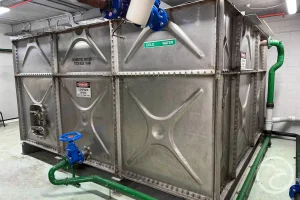
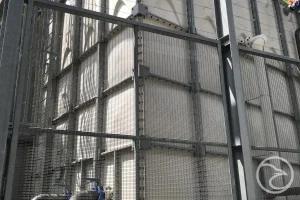
Sectional tanks are constructed using interconnected panels. This design can allow selected components to be repaired or replaced without removing the entire structure.
Sectional tank refurbishment may involve:
-
Replacing damaged panels.
-
Repairing or renewing seals.
-
Replacing corroded fasteners.
-
Restoring protective coatings.
-
Repairing structural connections.
-
Installing a new internal liner.
However, panel compatibility and structural condition must be assessed. Replacement components must be suitable for the existing tank design.
Panel Tank Refurbishment
Panel tanks may be constructed from galvanised steel or other suitable materials. Over time, panel joints, coatings, and connections can deteriorate.
Panel tank refurbishment focuses on restoring damaged components while retaining serviceable sections. The extent of work depends on corrosion severity, panel condition, and structural requirements.
Extensive panel deterioration may make complete replacement more practical.
Galvanised Steel Fire Tank Refurbishment
Galvanised steel tanks use a zinc coating to help protect steel components from corrosion. Damage to this coating can expose the underlying steel.
Refurbishment may involve corrosion treatment, compatible protective systems, or component replacement. However, severe corrosion and material loss may prevent certain components from being safely retained.
The suitability of repairs depends on the tank’s condition and engineering requirements.
Fire Water Tank Lining Repair
Liner repair is another refurbishment option for tanks with suitable supporting structures. Localised damage may be repairable using methods compatible with the liner material.
More extensive deterioration may require complete liner replacement. The decision depends on material condition, damage extent, and expected remaining service life.
A new liner cannot compensate for an unsafe or unsuitable supporting structure.
What Affects Fire Tank Refurbishment and Replacement Costs?
The cost of fire water tank refurbishment varies significantly between installations. A small repair project may require limited materials and labour. Extensive structural work can involve substantial planning, equipment, and downtime.
Several factors influence the overall project cost.
Extent of Existing Damage
Localised defects generally require less work than widespread structural deterioration. For example, replacing selected seals differs considerably from repairing multiple damaged panels.
The full scope should be established through a suitable condition assessment.
Tank Size and Construction
Larger tanks may require additional materials, labour, and access equipment. Construction materials also influence repair methods.
Steel, concrete, and lined panel tanks can require different refurbishment techniques.
Site Accessibility
Restricted access can increase project complexity. Tanks installed inside buildings or near other infrastructure may require specialised equipment.
Limited working space can also affect material handling and repair methods.
Water Storage and System Downtime
Some refurbishment activities require partial or complete tank drainage. This may interrupt the available water supply for connected fire protection systems.
Temporary water storage, alternative protection arrangements, and system reinstatement can influence total project costs.
Long-Term Maintenance Requirements
Initial cost should not be the only consideration. A lower refurbishment price may offer limited value if major repairs become necessary shortly afterwards.
Replacement may involve a higher initial investment but reduce some future maintenance risks. The comparison should consider expected service life, future repairs, and operational reliability.
How to Decide Between Fire Tank Refurbishment and Replacement
Choosing between refurbishment and replacement requires an assessment of technical condition, costs, and future operational needs. A structured decision process helps avoid unnecessary expenditure and unsuitable repairs.
Key Questions to Consider
Before selecting an option, consider the following:
-
Is the existing tank structurally sound? Determine whether the main structure can be safely retained.
-
How extensive is the damage? Identify whether deterioration is localised or widespread.
-
Can damaged components be replaced? Assess compatibility and repair feasibility.
-
Does the tank meet current storage requirements? Confirm the required capacity and system configuration.
-
What is the expected remaining service life? Consider the benefits of proposed repairs.
-
How do lifecycle costs compare? Include future maintenance and potential downtime.
-
Can fire protection remain available during the project? Assess necessary impairment and temporary protection arrangements.
A professional condition assessment can provide the technical information needed for these decisions.
Where refurbishment is suitable, professional fire tank refurbishment services can help restore damaged components and extend the tank’s service life.
Australian Standards and Compliance Considerations
Fire water tank refurbishment and replacement must consider relevant Australian fire protection requirements. AS 1851 addresses routine servicing of applicable fire protection systems and equipment.
AS 2304 establishes requirements for fire protection water storage tank design and construction. The National Construction Code and relevant state or territory requirements may also influence the project.
For a better understanding of Australian fire safety standards, explore our AS 1851 compliance requirements guide covering essential maintenance obligations.
Refurbishment and Existing Compliance Obligations
Refurbishment should not compromise the tank’s required operational performance. Repairs must consider relevant structural, water storage, and fire protection requirements.
The scope may also involve engineering assessment, suitable materials, and appropriate documentation.
Replacement and Current Design Requirements
A replacement tank may need to meet current requirements applicable to the proposed installation. These can include storage capacity, structural design, connections, and site-specific fire protection arrangements.
Requirements depend on the building, approval conditions, and applicable regulatory framework.
Managing Fire Protection System Impairments
Refurbishment and replacement may require temporary isolation of the water storage system. Any interruption must be planned and managed under applicable fire safety requirements.
Temporary protection measures may be necessary while the tank is unavailable. Following the work, relevant testing and commissioning activities should confirm the system’s required operational condition.
Conclusion
Fire water tank refurbishment and replacement both offer solutions for deteriorating fire protection water storage systems. Refurbishment may be suitable when the existing structure remains sound and damaged components can be safely restored.
Replacement may be necessary when deterioration is extensive, structural integrity is compromised, or existing capacity is inadequate.
The decision should consider repair feasibility, lifecycle costs, compliance obligations, and expected service life. A thorough condition assessment helps identify the most appropriate solution while maintaining reliable fire protection water storage.