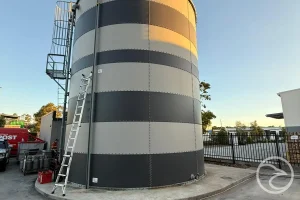
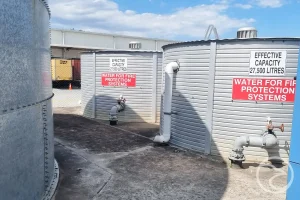
Water storage systems play a critical role across industrial, commercial, and infrastructure projects in Australia. From fire protection reserves to process and utility water, long-term system performance depends on more than just material selection. Water storage operational considerations such as site conditions, environmental exposure, and system configuration often have a greater impact on reliability over time.
Rather than focusing on individual tank types, understanding how storage systems behave in real operating environments helps facility managers reduce risk and plan for long-term performance.
Environmental Exposure and Site Conditions
Australian installations are frequently exposed to harsh environmental factors, including high UV levels, temperature fluctuations, humidity, and coastal air conditions. These factors influence how storage systems perform over extended periods.
Operational planning must account for ongoing environmental exposure, particularly where systems are installed outdoors or in regions with extreme weather patterns. Protective measures, appropriate material selection, and regular observation all contribute to more stable performance under these conditions.
Modular Configuration and Installation Constraints
Modular water storage systems are often selected for sites with restricted access, limited space, or structural constraints. Panel-based designs allow for staged assembly and flexibility in layout, which is especially valuable in remote or elevated locations.
From an operational standpoint, modularity also supports future changes in capacity. Systems can be expanded or modified with minimal disruption when operational demands increase, provided that initial design allowances are made.
Foundation Preparation and Structural Stability
System performance is closely linked to the quality of base preparation. Uneven foundations, inadequate load distribution, or settlement over time can affect panel alignment and joint integrity.
Ongoing monitoring of foundation stability is an important operational consideration, particularly for large-volume installations or sites with variable soil conditions.
Inspection and Monitoring Practices
Even where storage systems are designed for durability, routine inspection remains essential. Operational monitoring typically focuses on:
- joint performance
- panel alignment
- seal condition
- signs of movement or stress
These observations help identify minor changes before they develop into larger performance issues, supporting longer system lifecycles.
Temperature and Operational Load Factors
Water temperature ranges, filling cycles, and pressure variations all influence system behaviour over time. In some applications, repeated operational loading can place stress on joints and connections if not properly accounted for during design.
Effective water storage operational considerations include aligning system capacity, operating ranges, and usage patterns to reduce cumulative stress throughout the system’s service life.

Water Quality and Internal Conditions
For fire water and industrial applications, internal conditions influence maintenance routines and water quality management. Smooth internal surfaces and accessible inspection points simplify cleaning and reduce the likelihood of sediment accumulation.
Operational procedures typically focus on maintaining predictable internal conditions rather than relying on corrective interventions.
Lifecycle Performance and Long-Term Planning
Long-term performance is shaped by the combined effect of design decisions, installation quality, environmental exposure, and inspection frequency. Viewing storage systems as long-term operational assets rather than static installations supports better planning and risk management.
By addressing operational factors early, facilities can improve reliability, reduce unplanned downtime, and extend overall system service life.
Summary
Effective water storage planning goes beyond product selection. Performance outcomes are strongly influenced by how systems are designed, installed, and managed in real operating environments. Understanding key operational factors supports informed decision-making and helps ensure consistent performance across Australia’s varied conditions.