Water storage systems used across Australia must perform reliably in environments that range from coastal humidity to inland heat and remote industrial settings. Modular composite water storage systems are widely implemented in these contexts due to their adaptable configuration and predictable performance under challenging conditions.
Rather than focusing on specific tank products, understanding how modular composite systems function at a structural and operational level helps facility managers assess long-term suitability and performance expectations.
Composite Materials in Water Storage Systems
Composite storage systems are constructed using reinforced materials designed to balance strength and weight. In water storage applications, these materials provide resistance to moisture interaction and reduce susceptibility to corrosion-related degradation.
From an operational perspective, composite panels are most commonly used where environmental exposure would otherwise accelerate wear on traditional construction materials. This makes composite systems particularly relevant in industrial, coastal, and remote Australian locations.
Modular Configuration and System Adaptability
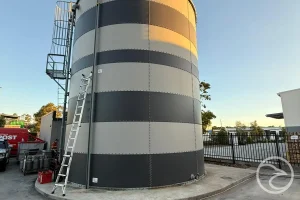
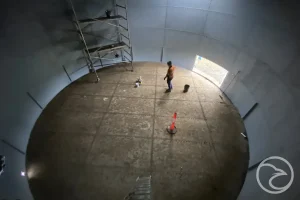
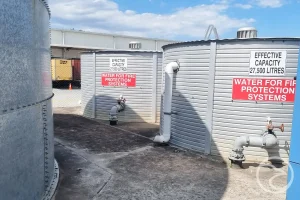
A defining characteristic of modular composite water storage is its panel-based configuration. Systems are assembled from individual sections that are transported separately and bolted together on site.
This modular approach allows installation in areas with restricted access, limited space, or elevation constraints. It also supports future capacity changes, as system volume can often be adjusted without dismantling the entire structure, provided initial design allowances are made.
Installation Accuracy and Joint Performance
While composite materials offer stable performance, system reliability is heavily influenced by installation accuracy. Joint alignment, gasket seating, and base preparation all play a critical role in maintaining long-term integrity.
Operational monitoring typically focuses on:
- joint condition and alignment
- seal performance
- foundation stability
- signs of panel movement
These factors are closely tied to installation practices rather than material behaviour alone.
Environmental Exposure in Australian Climates
Australian water storage installations are frequently exposed to high UV levels, temperature variation, and seasonal weather extremes. Composite systems intended for outdoor use must account for prolonged sunlight exposure through appropriate material specifications and protective measures.
Operating temperature ranges are another important consideration. Exceeding recommended limits can affect long-term system stability, making alignment between design parameters and site conditions essential.
Operational Handling and Site Management
During installation and maintenance activities, composite panels may be sensitive to heavy mechanical impact. Operational planning typically includes controlled access procedures and handling guidelines to minimise accidental damage.
Once in service, routine observation supports consistent performance without the need for intensive surface treatments or corrosion protection programs.

Lifecycle Performance Considerations
The long-term effectiveness of modular composite water storage systems is shaped by a combination of environmental exposure, installation quality, operating conditions, and inspection frequency.
Evaluating these factors together provides a clearer picture of how composite panel-based systems perform over extended service periods, particularly in demanding Australian environments.
Summary
Modular composite water storage systems offer a flexible and adaptable approach to large-scale water containment. Their performance depends less on material selection alone and more on how systems are designed, installed, and managed over time.
By focusing on system behaviour and operational context rather than product comparison, facilities can better manage risk and support long-term reliability across diverse Australian conditions.
Additional information on modular water storage system configurations can be found here.