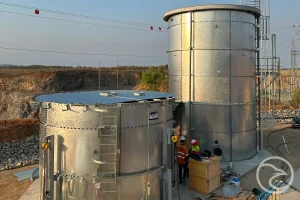
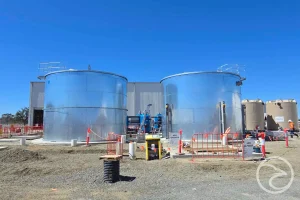
PVC water membranes are widely used in water storage infrastructure because they provide flexible, durable containment performance. These reinforced membranes create a protective internal barrier that helps maintain stable storage conditions while supporting long-term structural reliability. Understanding PVC water membrane performance helps explain why this material remains a trusted solution in modern water containment systems.
What Defines PVC Water Membrane Performance?
PVC membranes are engineered to balance flexibility, strength, and resistance to environmental exposure. Unlike rigid coatings or structural tank materials, flexible membranes can adapt to minor structural movement, temperature variation, and operational stress without losing containment integrity.
This adaptability supports consistent long-term water storage performance.
Flexibility and Structural Adaptation
A key aspect of PVC water membrane performance is flexibility. Storage tanks often experience expansion, contraction, and slight structural movement due to environmental conditions or operational factors. Flexible membranes can accommodate these changes while maintaining a continuous containment barrier.
This reduces the likelihood of cracking, separation, or internal material stress over time.
Resistance to Moisture and Environmental Exposure
Water storage infrastructure operates under constant moisture exposure. Reinforced PVC membranes are designed to resist prolonged water contact, humidity, and environmental variation without significant degradation.
UV exposure, temperature changes, and atmospheric conditions may affect many materials. PVC membranes are engineered to maintain stability in such environments, supporting reliable long-term containment.
Internal Surface Stability
PVC membranes create a smooth internal surface that helps maintain consistent containment conditions. This surface stability can support predictable water storage performance while limiting direct interaction between stored water and tank materials.
Stable internal conditions contribute to overall storage reliability.

Material Strength and Reinforcement
Modern PVC membranes typically include reinforcement layers that improve tensile strength and durability. These reinforcement structures allow membranes to withstand operational stress while maintaining flexibility.
Balanced strength and flexibility are essential for long-term containment performance.
Some storage systems rely on reinforced PVC containment to maintain stable internal conditions over time.
Long-Term Durability Considerations
Infrastructure planning increasingly considers lifecycle performance. PVC water membranes support this approach by offering adaptable containment solutions that can function effectively within existing tank structures.
Durability depends on environmental exposure, material quality, and system conditions, but reinforced PVC membranes are designed to maintain performance over extended periods.
Supporting Reliable Water Containment Infrastructure
As infrastructure demands grow and environmental conditions evolve, flexible containment materials become increasingly important. PVC water membrane performance reflects a balance between durability, adaptability, and consistent containment capability.
Understanding how these membranes perform helps organisations make informed decisions about maintaining reliable water storage infrastructure while supporting long-term operational stability.